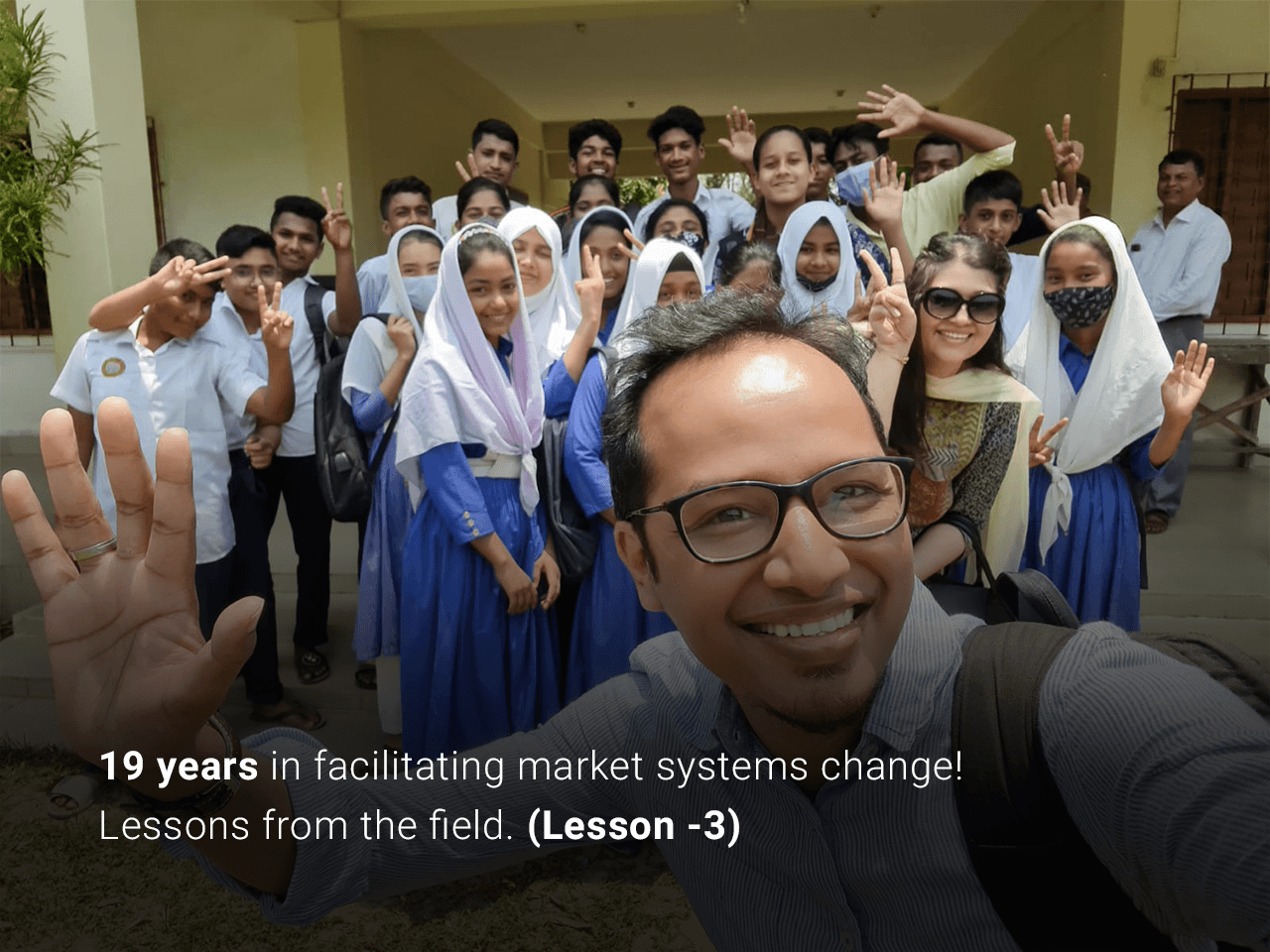
Md. Rubaiyath Sarwar, Managing Director and Lead Consultant at Innovision Consulting, draws from nearly two decades of designing and facilitating market systems interventions worldwide.
In his third lesson on market systems, he explores the necessity of aligning donor interests with market realities. He emphasizes that private sector agribusinesses are driven by profit and business viability rather than humanitarian motives. While a company may promote organic food or gender inclusion, these actions are strategic moves to build a competitive advantage or meet consumer demand. Facilitators must accept this "hard truth" to ensure that the pursuit of a public good, such as climate resilience, translates into a viable "currency" for private actors, preventing system collisions.
To bridge this gap, Innovision recommends a tactical approach: select value chains with high exposure to current market "pains," such as soil salinity or erratic weather. By identifying existing global innovations and adapting them to the local context, facilitators can address climate-smart agriculture while ensuring business profitability. This alignment creates a butterfly effect across interconnected systems. Md. Rubaiyath Sarwar suggests that once a solution proves viable, promoters should shift toward "blue ocean strategies" to ensure the market continues to thrive independently after the project concludes, securing long-term economic cohesion.
Read the full report here: Link
.png)