Bangladesh built one of the great manufacturing success stories of the last generation. Export earnings climbed from $6.4 billion in 2000 to a record $48.28 billion in FY2024-25, up 8.58% that year alone. Then the momentum broke: FY2025-26 brought a slight dip, merchandise exports slipped 0.58% to $48 billion. It's a small decline in absolute terms, but it's the first pause in a run that had looked unstoppable, and it's landed just as the country faces its biggest structural test yet.

Abroad, buyers in the US and Europe are spending less on apparel as inflation squeezes household budgets, and they're layering on tougher environmental and labor standards before placing orders. Meanwhile, competitors aren't standing still: Vietnam has pushed hard into electronics and machinery, pulling in foreign investment that used to look for Bangladesh. India and Indonesia are diversifying too.
At home, the cost of doing business keeps climbing. Wages have risen alongside the cost of living, raw materials like yarn and dye cost more, and gas and power shortages keep factories from running at capacity. Port delays add friction on top of all of it.
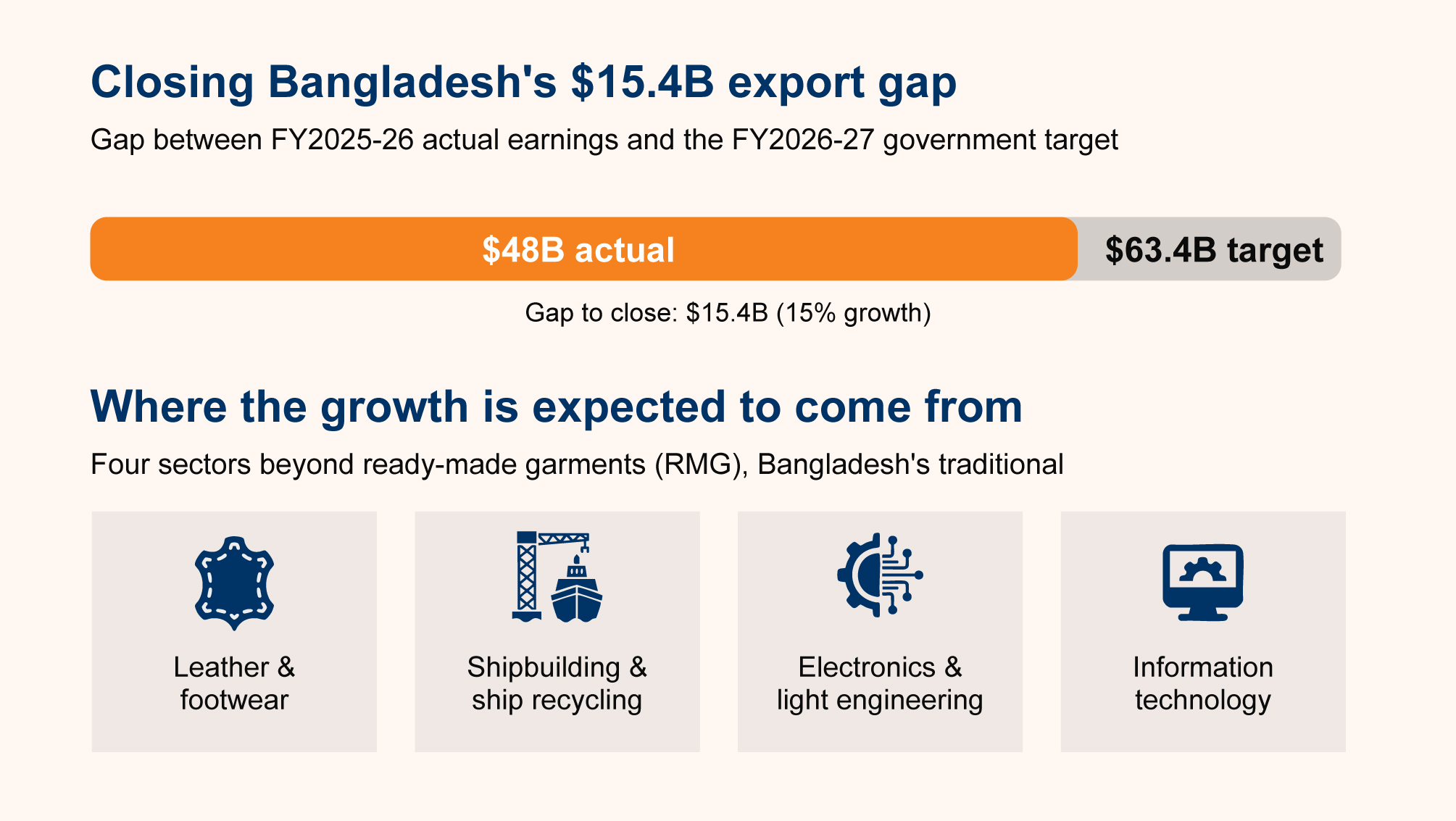
Policymakers want $63.4 billion in total exports by FY2026-27, a 15% jump from current levels. Mustafizur Rahman of the Centre for Policy Dialogue has flagged the obvious obstacles: high borrowing costs, a fragile banking sector, and an energy crisis that isn't going away soon.
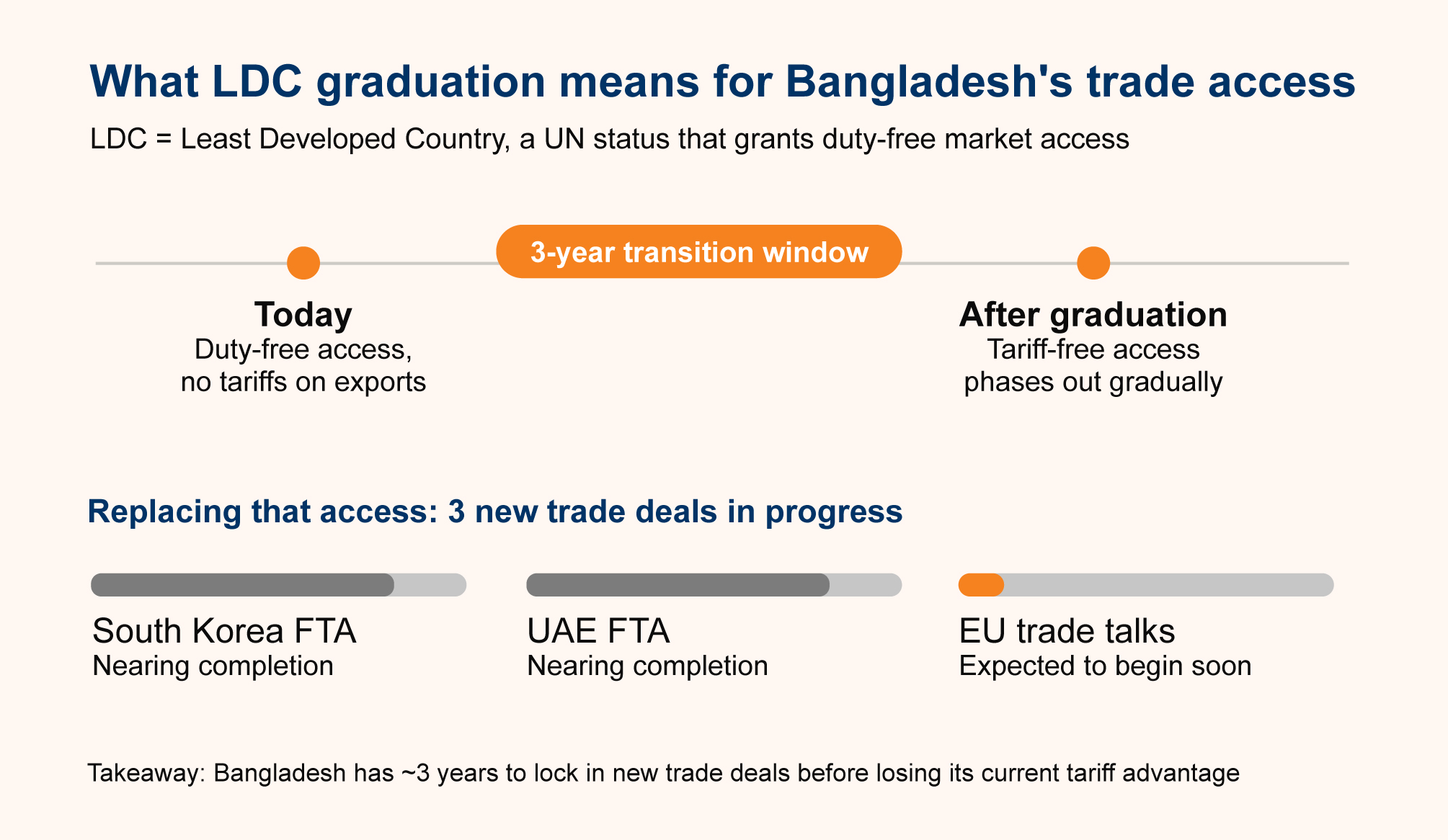
There's also a bigger clock running. Bangladesh is set to graduate from Least Developed Country status, a milestone worth celebrating, but one that comes with a cost: the duty-free market access that's underpinned RMG's growth for years will start to disappear.
Commerce Minister Khandaker Abdul Muktadir has called moving beyond apparel a national priority, and the government is backing four sectors to lead the next phase: leather and footwear, shipbuilding and ship recycling, electronics and light engineering, and IT.
Getting there means fixing the basics first:
Bangladesh has the manufacturing base and the workforce to pull this off. What it needs now is the infrastructure, energy security, and trade architecture to make diversification more than a talking point.
Author: Nusrat Zabeen Radia, an Associate in the Industrial Productivity and Worker's Wellbeing Portfolio at Innovision Consulting
.png)