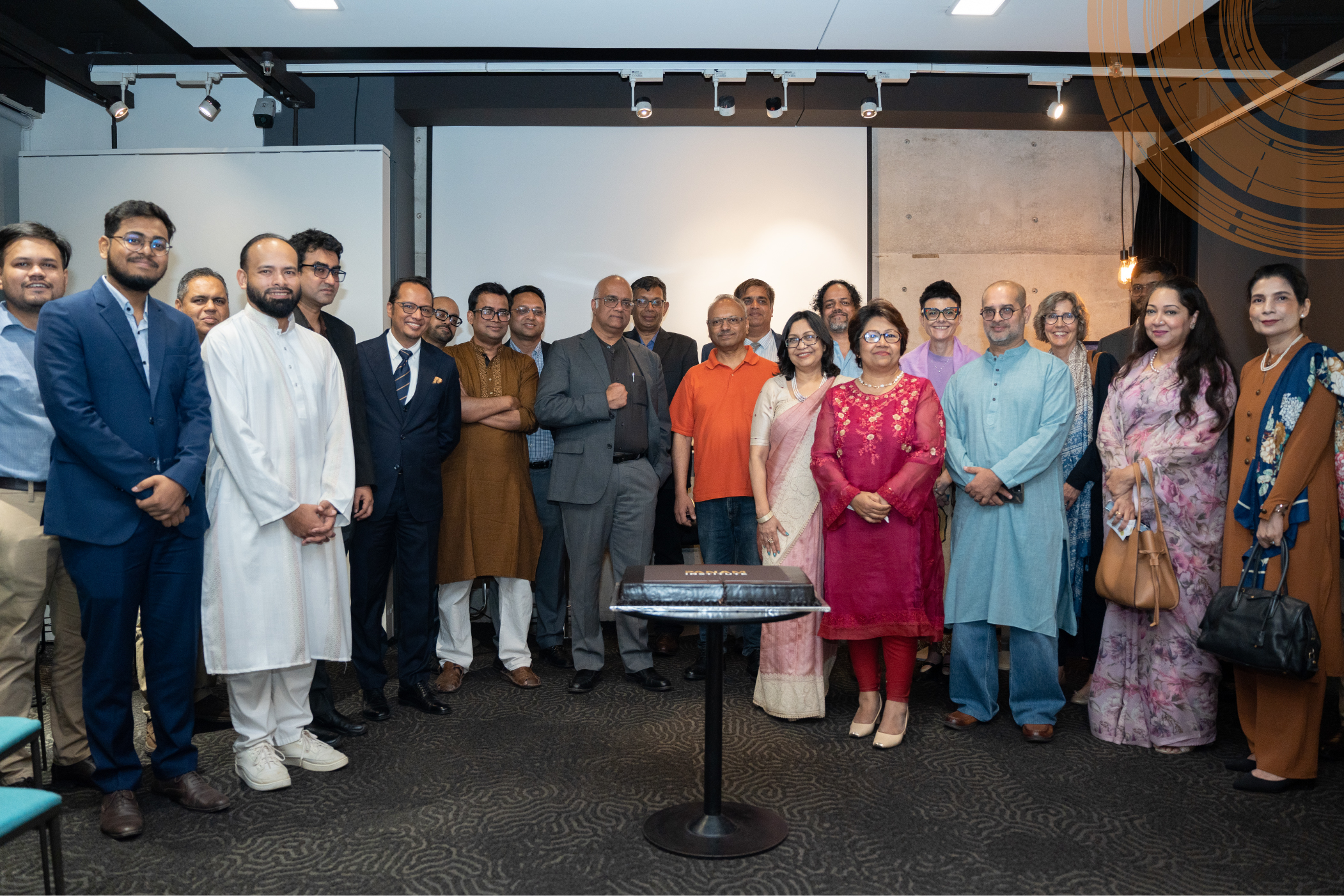
A new policy institution has entered Bangladesh's economic discourse. The Panam Institute officially launched operations on 23 July 2026 in Gulshan, Dhaka, positioning itself as an independent, non-partisan think tank built to close the distance between academic research and public policymaking.
The Institute traces its roots to an informal network of economists and policy enthusiasts who first gathered on social media in the early 2020s to debate Bangladesh's economic direction, a network that would later evolve into a formal research institution. Md. Rubaiyath Sarwar, Managing Director at Innovision Consulting, was one of the members of this founding group.
The launch event doubled as a policy discussion on Bangladesh's economic priorities during what organisers called a critical geopolitical and post-revolution transition period. The Institute's mandate rests on five pillars: macroeconomic stability and governance, inclusive development and socio-economic equity, trade and investment geoeconomics, sustainability and climate finance, and banking and capital markets.
The Institute's roots run through public engagement, not academic isolation. Following the 2024 Monsoon Revolution, the founding group launched Orthonitir Barota, a podcast that popularised policy debate among a wider audience. Momentum built further at the October 2025 Economic Reform Summit, where public response made the case for a permanent institution impossible to ignore.
A central session, "The Economic Tests the Government Must Pass in Its First 18 Months," anchored the launch. Jyoti Rahman, Chair at Panam Institute and macroeconomist at the International Monetary Fund, addressed the implementation challenges facing budget execution and economic planning in the years ahead. He pointed to institutional capacity, policy coordination, and realistic reform sequencing as the real constraints standing between economic targets and measurable outcomes.
The Panam Institute plans to publish research papers, policy briefs, and advisory recommendations aimed at practical application rather than academic exercise alone. Its long-term goal, the Institute says, is to serve as a durable platform for evidence-based dialogue among policymakers, business leaders, academics, development partners, and civil society, at a moment when Bangladesh faces pressure on multiple fronts: global economic uncertainty, trade realignments, climate financing demands, and banking sector vulnerabilities among them.
Media Coverage of this Event: The Daily Star | Dhaka Tribune
.png)