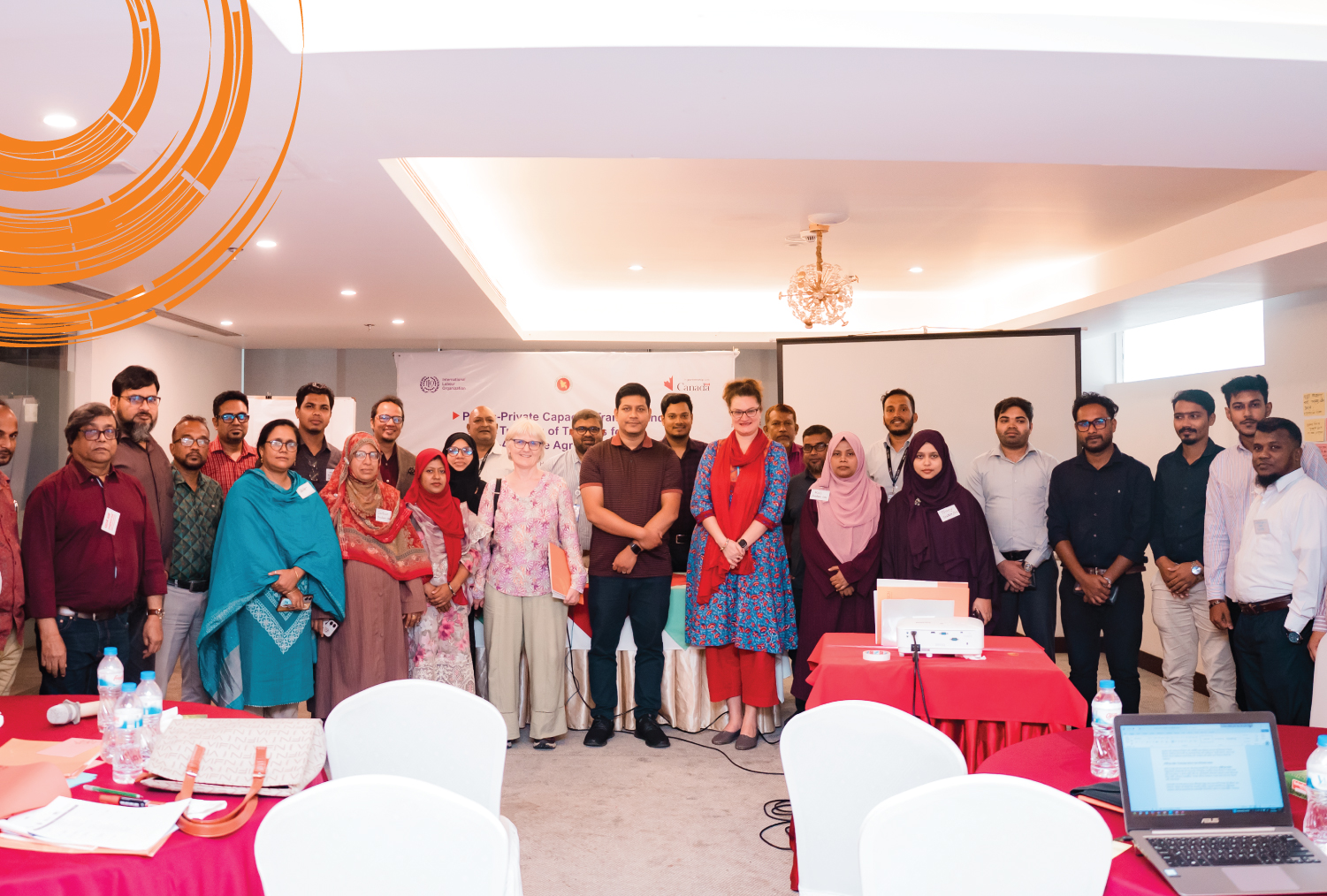
On 6 and 7 August, Innovision Consulting conducted a two-day Public–Private Capacity Transfer and Training of Trainers (ToT) on Climate-Adaptive Agriculture, bringing together 28 participants from government agencies and private-sector agribusinesses at Hotel Windy Terrace, Cox’s Bazar. The program marks an important step in transferring the project’s standardized farmer and retailer training system to the institutions and technical professionals expected to sustain and deliver it beyond the project period.
The ToT was conducted under the Leaving No One Behind: Improving Skills and Economic Opportunities for Women and Youth in Cox’s Bazar (ISEC) Project, implemented by the International Labour Organization (ILO) and funded by Global Affairs Canada (GAC), with Innovision Consulting serving as the implementation partner for the climate-adaptive agriculture intervention. The intervention supports 400 agricultural micro, small and medium enterprises (MSMEs)—300 commercial farmers and 100 agro-input retailers—across Cox’s Bazar Sadar, Ramu, Ukhiya, and Teknaf.
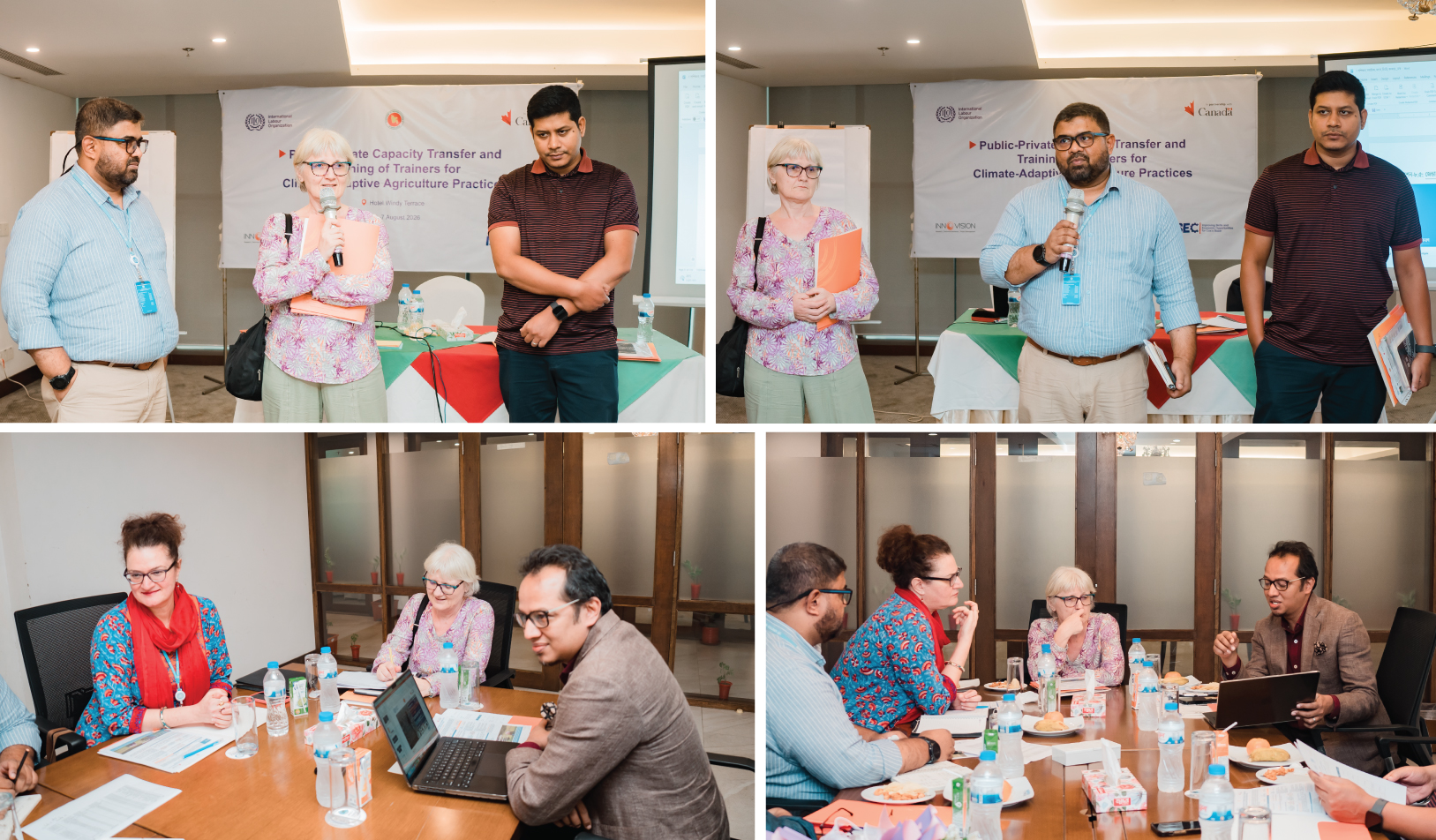
The ToT responds to a key systemic challenge identified by the project: the absence of a consistent mechanism through which public extension agencies and private agribusinesses can jointly provide climate-adaptive, inclusive, and market-oriented technical and business support. Rather than establishing a project-dependent training structure, the program is designed to build a shared pool of capable trainers, transfer standardized modules and facilitation resources, and progressively strengthen partner ownership of field-level delivery.
Participants represented the Department of Agricultural Extension (DAE), Department of Fisheries (DoF), Department of Livestock Services (DLS), and Department of Social Services (DSS), together with private-sector partners Ispahani Agro Limited, ACI Seed, ACI Godrej Agrovet, EON Animal Health Products Limited, and Anwar Cement Sheet Limited (ACSL).
Over the two days, participants worked through six standardized livelihood-based training modules covering fish farming/aquaculture, commercial and intensive vegetable cultivation, maize cultivation, poultry rearing, input-business development, and vine/gourd vegetable cultivation. The program combined technical module orientation with adult-learning principles, participatory facilitation techniques, and the respective roles of public and private actors in subsequent field delivery.
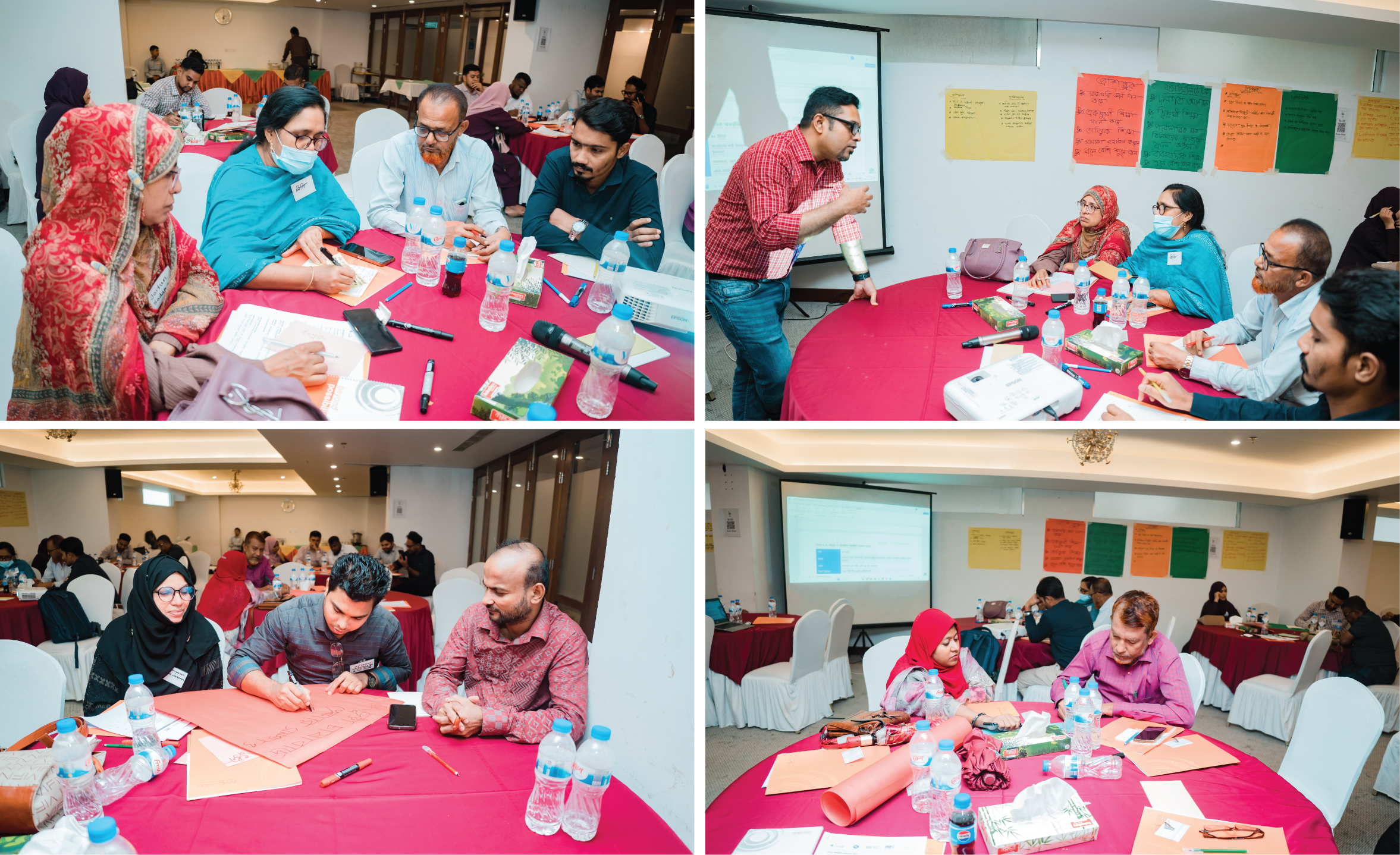
The second day placed particular emphasis on turning technical knowledge into effective training practice. Participants undertook micro-teaching exercises, peer feedback, training planning, and local adaptation, helping them strengthen their ability to deliver consistent and practical sessions in their respective sectors and locations.
A dedicated focus on Gender Equality, Disability, and Social Inclusion (GEDSI) strengthened participants’ capacity to make future training accessible to women, youth, and persons with disabilities. The program also integrated Prevention of Sexual Exploitation, Abuse, and Harassment (PSEAH); Occupational Safety and Health (OSH); climate-risk considerations; and safe, inclusive training practices. Each participant developed an action plan to guide the application and cascade of the learning within their institutional or organizational context.
Representatives from Global Affairs Canada and the International Labour Organization, including Pearl Wierenga of the Canadian High Commission, visited the programme on the first day, observed the participatory sessions and interacted directly with participants. The visit provided an opportunity to see how public agencies and private-sector actors are being brought together around common technical messages, facilitation standards and a shared approach to climate-adaptive agricultural support.
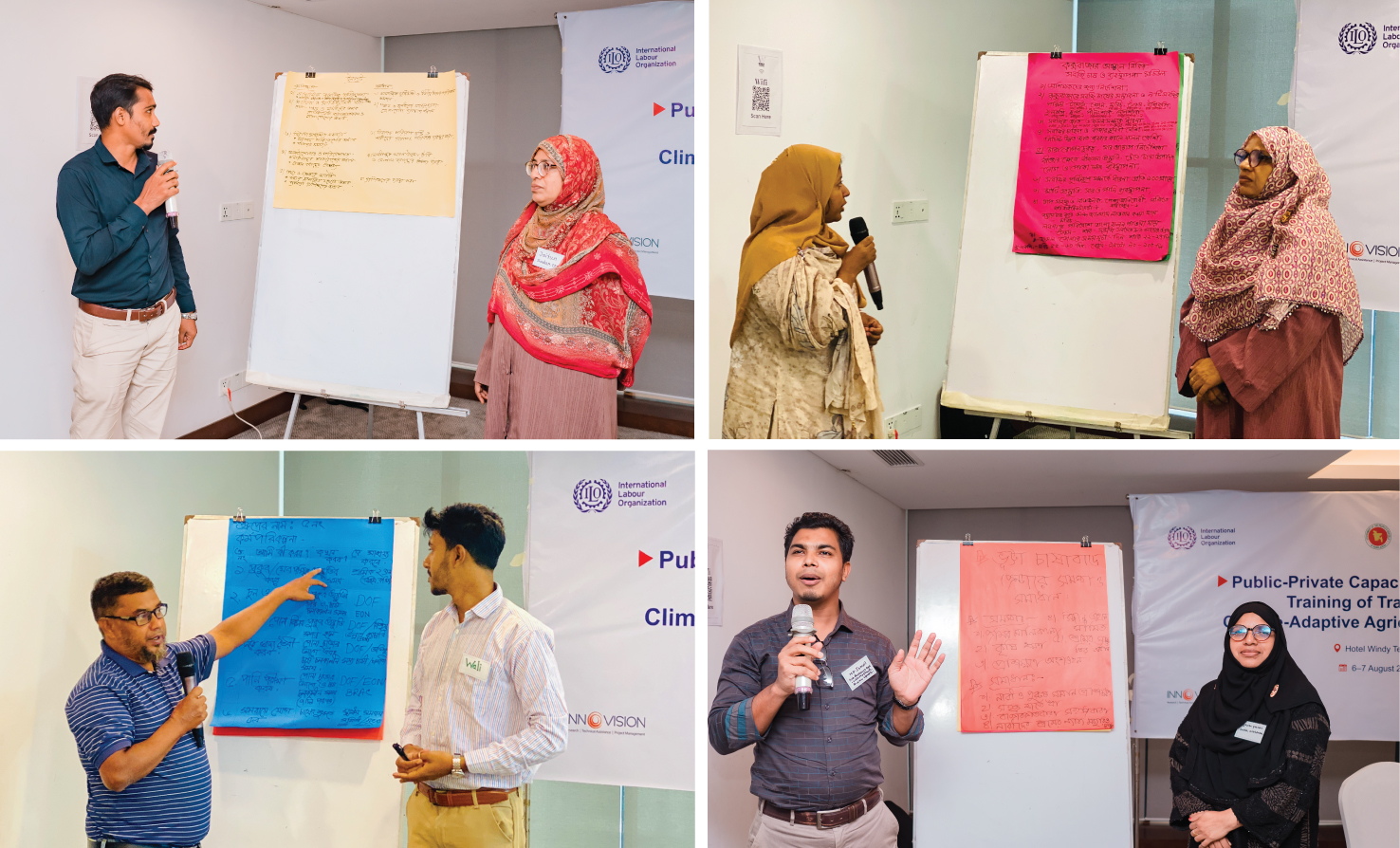
The ToT is not a stand-alone training event. It is the first stage of a wider capacity-transfer process through which qualified public- and private-sector professionals will increasingly lead field-level training and technical support. Private-sector trainers will contribute specialized technical, product, and market expertise, while DAE, DoF, and DLS will provide sector-specific technical guidance and local extension linkages.
Following the ToT, the trained participants will apply the modules and facilitation approaches through the project's farmer and retailer training activities, while Innovision continues to provide coordination, technical backstopping and quality assurance. This gradual transfer of knowledge, resources and delivery responsibilities is intended to reduce dependence on project-led services and strengthen a locally anchored public–private support system for climate-resilient enterprises, safer and more decent work, and inclusive agricultural development in Cox’s Bazar.
.png)