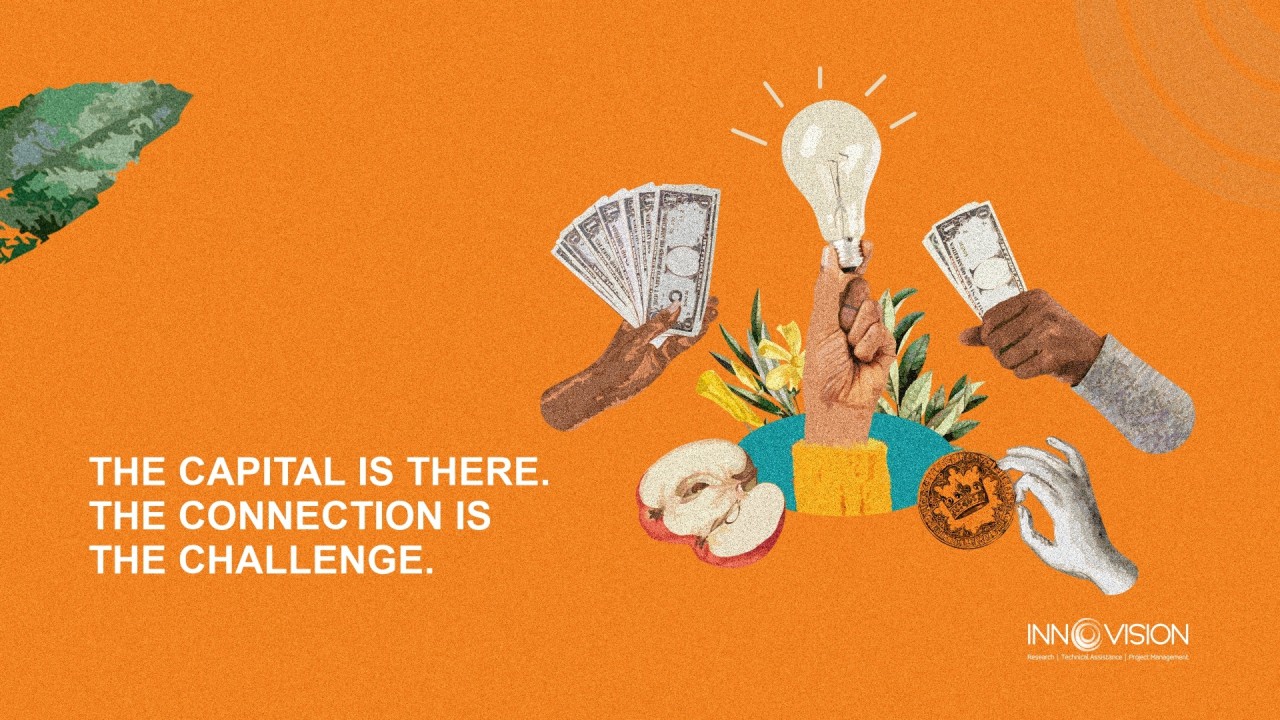
Nigeria has no shortage of problems that require investment.
Agriculture needs finance to reach more smallholder farmers. Healthcare and education need new delivery models. Renewable energy needs capital to expand access. Financial inclusion requires businesses that can reach people and communities conventional finance has often struggled to serve.
There is also capital flowing into these opportunities.
Nigeria’s impact investing ecosystem has become more diverse since 2019, with development finance institutions, private investors, financial institutions, and other capital providers participating across sectors. Local-currency financing is also becoming increasingly relevant. The landscape is no longer defined by a single type of investor or financing model.
Yet for many businesses, access to that capital remains difficult. The issue is not simply whether capital exists. It is whether the right capital can reach the right businesses at the right stage.
Consider a Nigerian agribusiness that has built a customer base and is generating revenue. Its model creates income opportunities for farmers, and improves access to markets. It is ready to expand, but needs ₦200 million to do so.
The business approaches an investor with a compelling growth story. The investor, however, needs stronger financial reporting, clearer governance structures, evidence of growth, a more developed data room, and reliable information about the impact or SDG-aligned outcomes being generated.
The business now faces a difficult gap. It may be commercially viable, but preparing for investment can take additional time, expertise, and resources, while the opportunity it wants to pursue does not necessarily wait.
This is the reality behind what the Nigerian Impact Investing Landscape Study 2025 identifies as the missing middle.
Many SMEs and Small and Growing Businesses (SGBs) sit between conventional small-business lending, and the larger tickets typically considered by institutional investors. The study identifies ticket-size mismatch, limited local-currency financing, foreign-exchange exposure, and a shortage of flexible instruments such as mezzanine and revenue-based finance among the constraints affecting this segment.
A business can have customers, revenue and a viable solution to a real problem, yet still struggle to find capital that fits.
That gap matters because impact investing is not simply about finding organisations doing good work. It requires businesses that can attract and deploy investment while generating financial returns, and measurable social or environmental outcomes.
For an enterprise, this changes the question. Instead of asking only, “Where can we get funding?”, the more useful question is, “What would make us investable?”
A compelling mission is only part of the answer. An investor needs to understand the numbers behind the mission: how the business makes money, how it manages costs, what its growth assumptions are, who is responsible for key decisions, and how the organisation will demonstrate the outcomes it claims to create.
Those capabilities take work to build. Financial management, governance, investment documentation, impact measurement, and data systems all shape how an investor assesses an opportunity.
Technical assistance can help businesses build these capabilities before they approach the market, making it more closely connected to the investment process rather than operating as a separate intervention.
The study points to stronger integration between technical assistance and finance, with support linked more deliberately to the needs of businesses preparing for investment.
The objective is not simply to make more businesses “fundable”. It is to build a pipeline in which businesses can move from potential to readiness, readiness to investment, and investment to growth.
Investment readiness, however, cannot solve the problem on its own. A business can be ready for investment, and still receive the wrong kind of capital.
A growing SGB may need equity to finance expansion rather than debt that creates immediate repayment obligations. A business earning primarily in naira needs financing that reflects its revenue base rather than exposing it unnecessarily to foreign-currency risk. A higher-risk enterprise may require a guarantee or concessional capital before commercial investors are willing to participate.
The structure of the financing can be as important as the amount.
The study identifies guarantees, first-loss capital, concessional debt and other risk-sharing mechanisms as tools for addressing the gap between perceived risk and investor appetite. It also highlights local-currency instruments, including green and social bonds, as opportunities to deepen Nigeria’s impact investment market.
More money in the system does not automatically mean better access to finance. The capital has to match the enterprise, the risk, the stage of growth and the outcome being pursued.
Nigeria has many of the actors needed to create this market: businesses seeking growth capital, investors searching for deals, financiers providing finance, development partners offering catalytic finance, and institutions that can strengthen the ecosystem.
What is missing is stronger infrastructure and coordination to link them together.
A business should not have to discover what investors require only after entering a financing process. Technical assistance should be connected to real investment opportunities. Investors need better information to assess both financial performance and impact. And financing structures need to reflect the realities of Nigerian businesses rather than forcing very different enterprises into the same model.
The study points towards this broader shift: stronger local-currency markets, better integration of technical assistance, greater use of blended and catalytic structures, stronger impact measurement, and increased mobilisation of domestic institutional capital.
The opportunity is to move beyond isolated transactions, and build a more predictable investment pipeline, one where credible enterprises can be identified and prepared, investors can find opportunities more efficiently, and capital can be structured around the businesses receiving it.
Nigeria’s impact investing market has already demonstrated that capital can flow towards businesses, and sectors aligned with development outcomes. The study estimates US$2.95 billion in SDG-aligned capital across 387 deals involving 222 investee companies between 2019 and 2025, based on a conservative, deduplicated analysis.
The next phase is about making the ecosystem work better around that capital.
Enterprises need to strengthen the financial, governance, and impact systems that make them ready for investment. Investors and financial institutions need financing structures that reflect different stages, risks, and business models. Development partners can use technical assistance and catalytic capital to help unlock commercial investment. Policymakers and market institutions can strengthen the local-currency, data, and measurement infrastructure that allows these actors to connect.
If these pieces begin to work together more deliberately, Nigeria can move from a market characterised by individual impact transactions towards one with a deeper, and more predictable pipeline of investable businesses.
The opportunity is not simply to put more capital into the market. It is to build the connections that allow capital, enterprises and measurable impact to grow together.
Source Note: This article draws on findings from the Nigerian Impact Investing Landscape Study 2025.
Author: Divine Nwoye, Communications Associate, Innovision Consulting Africa
.png)