Unlocking Global Markets for Indonesian SMEs: Innovision Consulting Presents Preliminary TRISEG Assessment in Jakarta
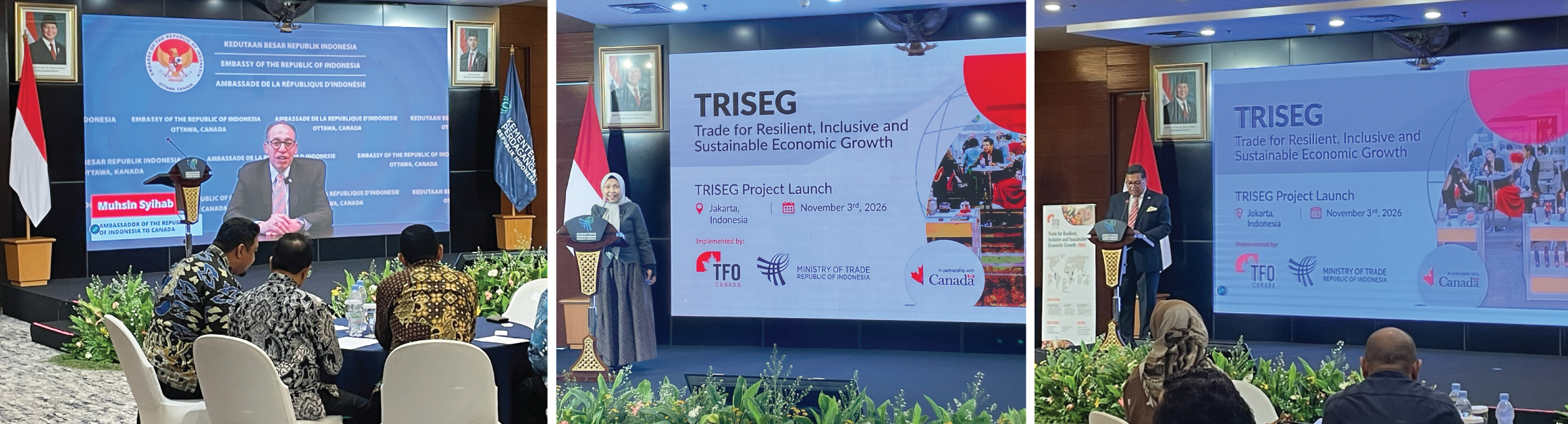
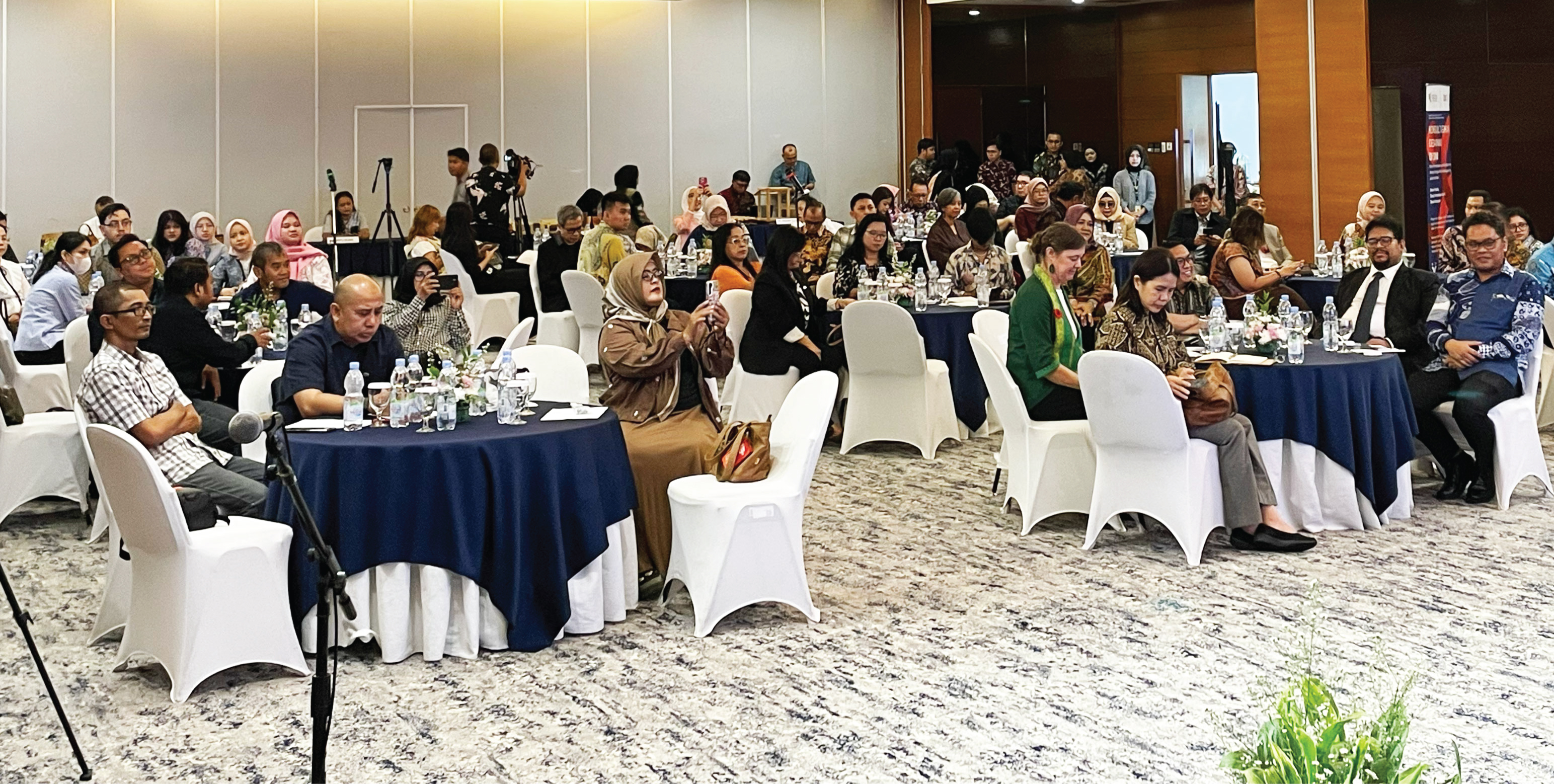
On November 3, 2026, in Jakarta, the Trade for Resilient, Inclusive and Sustainable Economic Growth (TRISEG) project officially launched with a comprehensive Market Research Validation Workshop. Funded by the Government of Canada through Global Affairs Canada, organized by Trade Facilitation Office (TFO) Canada and implemented in Indonesia by the Directorate General of National Export Development (DGNED), this multi-year initiative (2026–2030) is set to transform the export capabilities of Indonesian Small and Medium Enterprises (SMEs).
The Innovision Consulting Indonesia team had the privilege of conducting the preliminary market assessment and facilitating the stakeholder consultation to test and validate core findings before key industry associations (ASEPHI, ASMINDO, HIMKI etc.), government representatives and international partners.
Strategic Context: A Window of Opportunity
The timing for Indonesian exporters could not be better. Canada imported CAD 3.3 billion of goods from Indonesia in 2024, with steady growth across handcrafted categories. Furthermore, with the anticipated entry into force of the Canada–Indonesia Comprehensive Economic Partnership Agreement (CEPA), Canada will eliminate duties on over 90% of tariff lines. Canadian consumer preferences are shifting heavily toward ethical, story-led and natural-material goods – areas where Indonesia excels.
Key Assessment Insights Presented by Innovision Consulting:
Craft Capability vs. Commercial Readiness: Indonesian artisans possess exceptional production capabilities, but direct market linkage remains thin. Out of 33 SMEs surveyed, only 10 currently export directly, while 21 serve as indirect suppliers to other aggregators or traders – often at compressed margins.
Priority Product Segments: The assessment identified bags and travel goods alongside natural-material home and seasonal décor as the strongest immediate fits for SME capacity and Canadian buyer demand. These sectors also represent areas with the highest participation of women-owned enterprises.
Buyer Matching & Delivery Gaps: Finding and maintaining contact with right-fit international buyers ranked as the single largest barrier across all readiness levels. Artisans frequently encounter mismatched buyer expectations such as industrial-scale minimum order quantities (MOQs) or rigid lead times that clash with handmade craft production.
The Working Capital Paradox: Access to finance is often framed as a lack of general credit, but the assessment revealed that 67% of surveyed SMEs rely purely on personal or family savings and many are hesitant to take on formal loans. The real friction lies at the Purchase Order (PO) stage: artisans require upfront working capital to fulfill orders when buyers offer down payments of 50% or less.
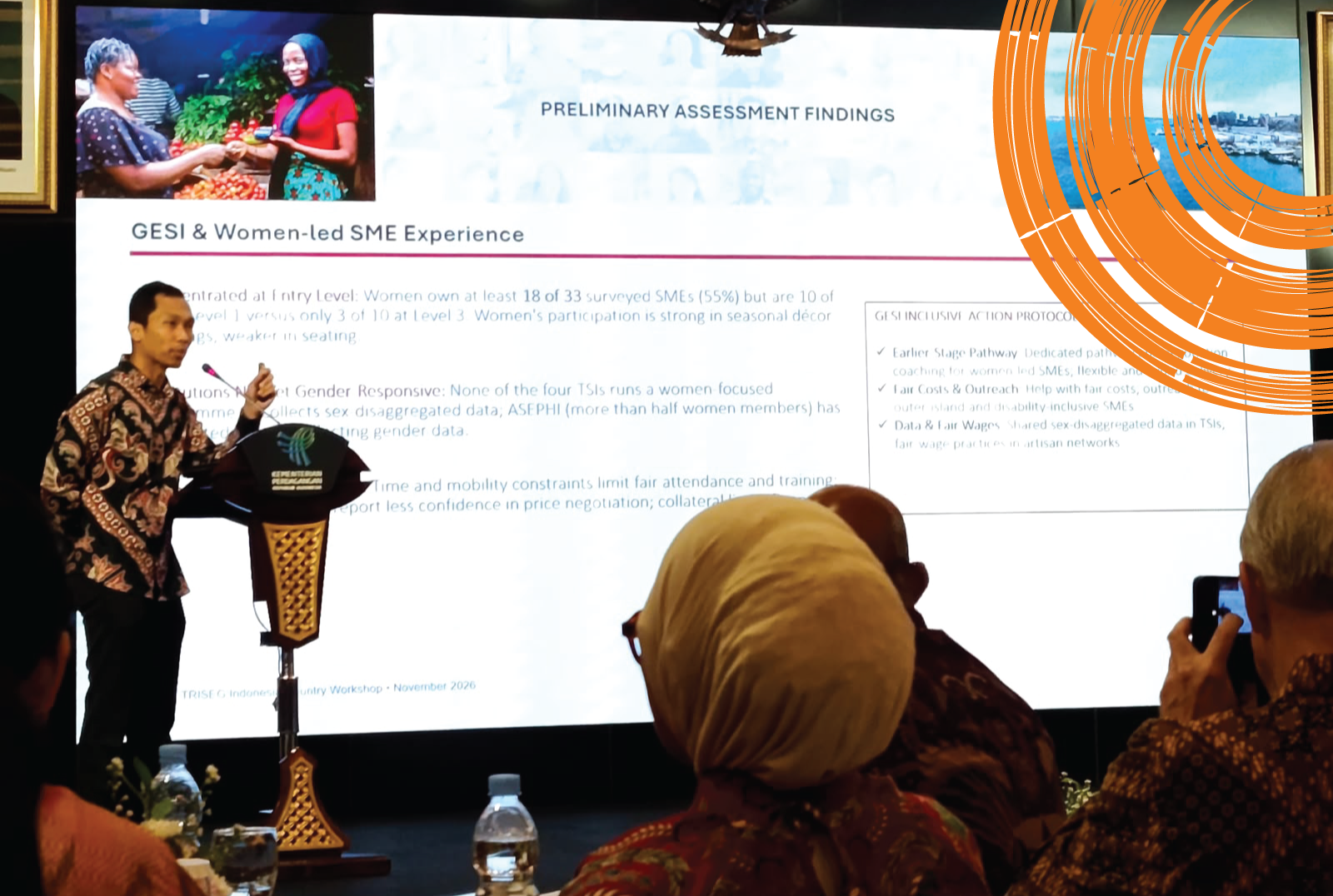
Gender Equality & Social Inclusion (GESI): Women own 55% of the surveyed enterprises but are heavily concentrated in early-stage, indirect export tiers (representing 10 of 14 non-exporting SMEs, compared to just 3 of 10 established direct exporters). Addressing time constraints, domestic care responsibilities, property collateral barriers and price negotiation confidence will be essential for equitable growth.
The Sustainability & Compliance Challenge: While eco-friendly, circular practices (upcycling, natural dyes, zero-waste methods) are common on the ground, fewer than 12% of surveyed SMEs hold internationally recognized certifications due to high costs and complex documentation requirements.
Moving from Validation to Action
The feedback and validation gathered during the Jakarta workshop are directly informing the final Country Analysis. Over the 2026–2030 project horizon, these insights will anchor TRISEG’s tailored interventions, including:
Staged, level-based export coaching for SMEs.
Curated B2B buyer missions and pilot orders linked to events like IFEX, Inacraft and Trade Expo Indonesia (TEI).
PO-backed financing solutions in coordination with institutions like LPEI and commercial banks.
Climate resilience and green export documentation support.
Innovision Consulting is proud to contribute the evidence base guiding this vital bilateral partnership between Indonesia and Canada.
Thank you! Your submission has been received!
Oops! Something went wrong while submitting the form.