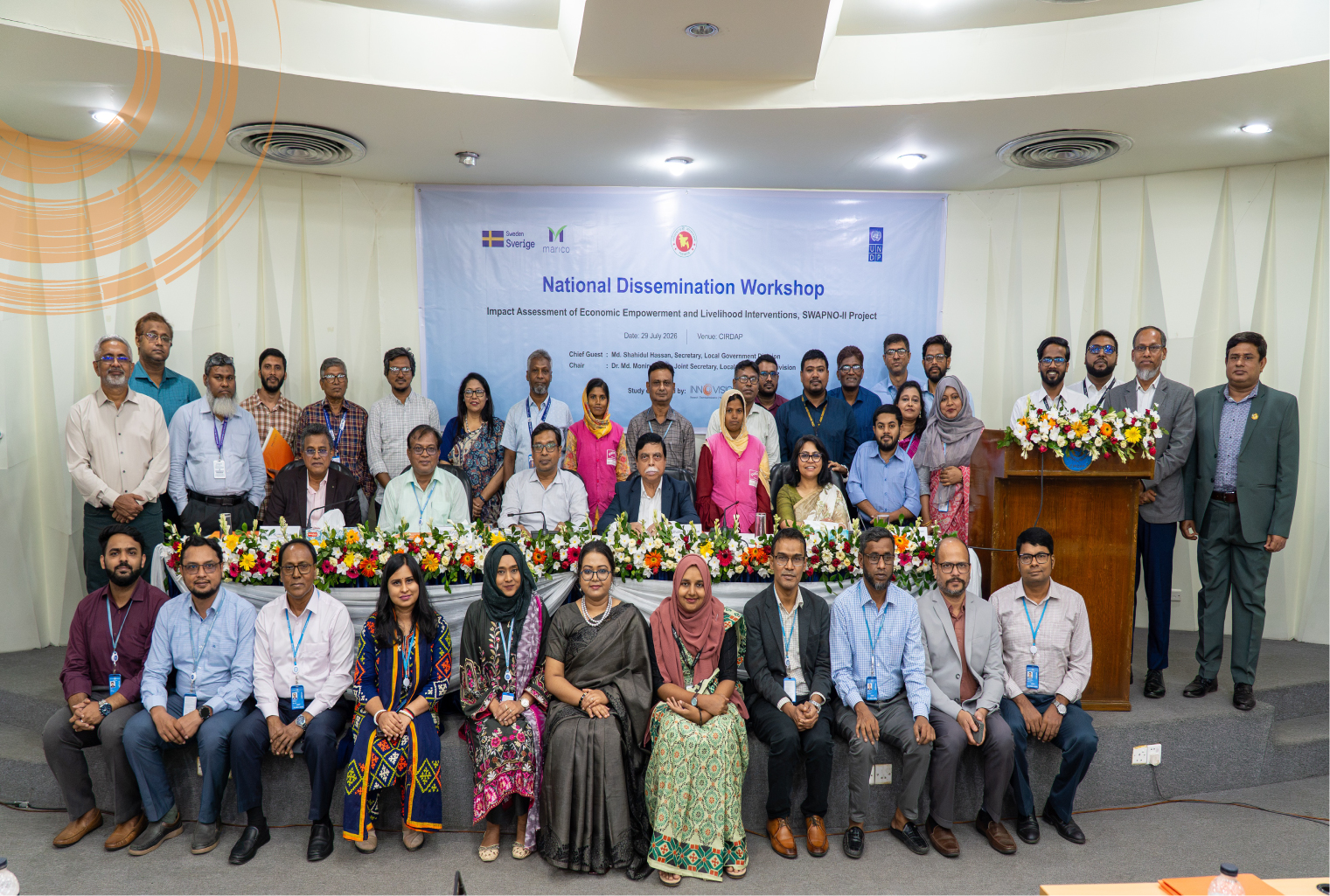
10,188 ultra-poor, climate-vulnerable women across 12 districts have built sustainable livelihoods and strengthened their economic resilience under the SWAPNO-II project, a joint initiative of the Local Government Division and UNDP. The findings were presented at a national dissemination workshop at CIRDAP, Dhaka, on 29 July 2026.
The project reached female-headed households across 283 union parishads in 32 upazilas, including women who are widowed, divorced, separated or abandoned, and women whose husbands cannot earn a minimum income due to disability. The project was implemented by the Local Government Division with technical support from UNDP, and supported by the government of Sweden and Marico.
Speaking as the chief guest, Md. Shahidul Hassan, Secretary of the Local Government Division, said the government remains committed to expanding women's access to skills, financial services, economic opportunities and decent livelihoods. He said the experience showed that a well-designed poverty graduation approach, supported by strong partnerships between the government, development partners, non-government organisations and the private sector, could create lasting and transformative change.
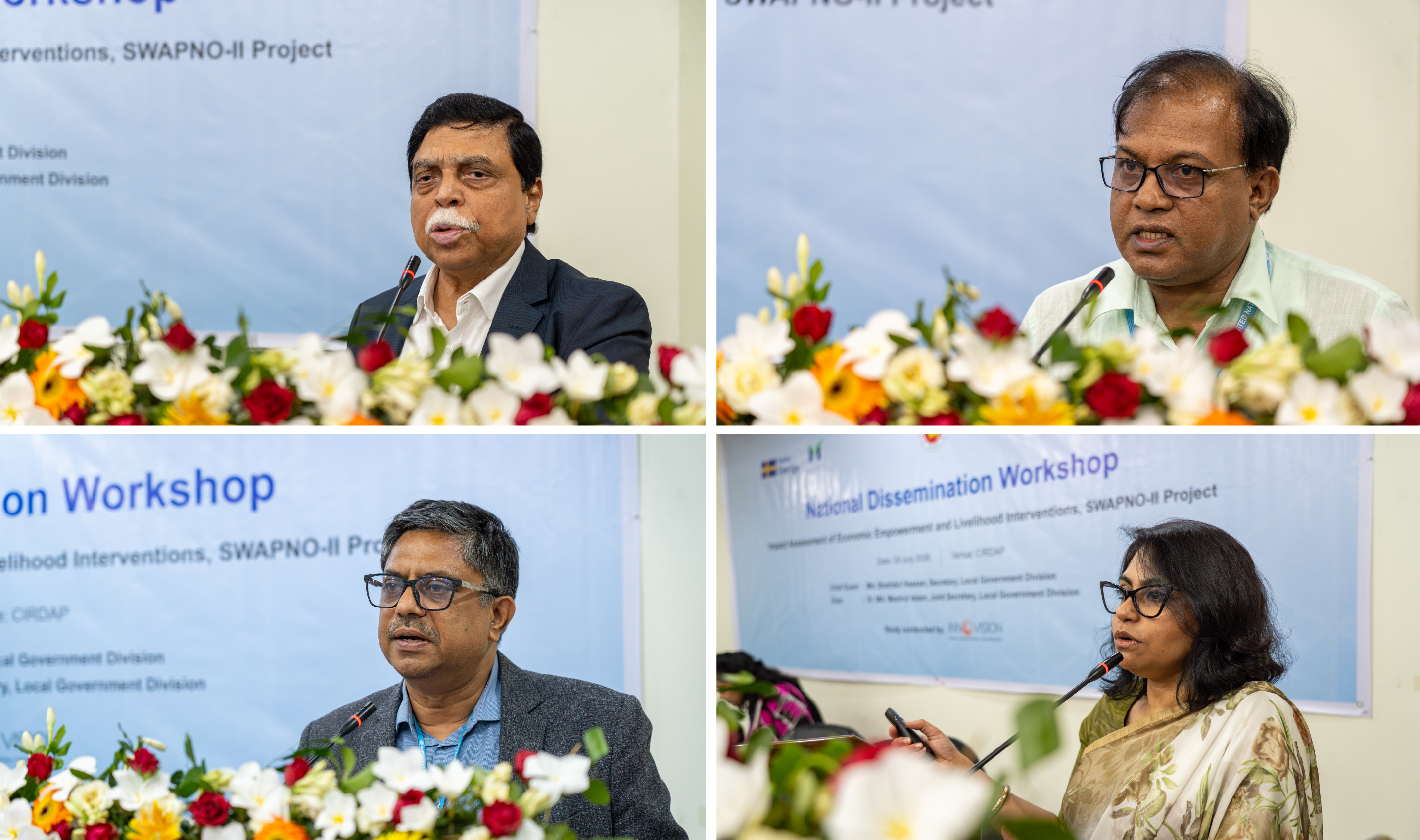
Dr. Md Monirul Islam, Joint Secretary of the Local Government Division and National Project Director of SWAPNO-II, said evidence and learning were essential for improving public policy and designing future programmes for ultra-poor and climate-vulnerable women. "The findings will help us understand what has worked, identify opportunities for improvement and inform future initiatives aimed at strengthening women's economic empowerment, sustainable livelihoods and inclusive local development," he said.
Anowarul Haq, Assistant Resident Representative of UNDP Bangladesh, delivered the welcome address and Ashish Kumar Bakshi, National Project Manager of SWAPNO-II, delivered the project brief. Tasmiah Tabassum Rahman, Portfolio Advisor at Innovision Consulting, presented the assessment findings. UNDP had commissioned Innovision to conduct the impact assessment of the economic empowerment and livelihood interventions of the SWAPNO-II project , evaluating how economic interventions impacted ultra-poor, climate-vulnerable women aged 18 to 45. The team conducted field surveys, key informant interviews and focus group discussions across the 12 districts, comparing outcomes across four intervention pathways: climate-adaptive livelihoods, formal sector employment, apprenticeship and entrepreneurship.
The study assessed the impact of the economic empowerment and livelihood interventions of the SWAPNO-II project, beneficiary-level success stories and policy recommendations for climate-resilient ultra-poor graduation. Participants emphasised the importance of using the assessment findings to strengthen future poverty alleviation programmes and expand sustainable economic opportunities for vulnerable and destitute women across Bangladesh.
Media Coverage of this National Dissemination Workshop :
UNB: 10,000 women empowered to build sustainable livelihoods under SWAPNO-II project
BSS News: Over 10,000 ultra-poor, climate-vulnerable women receive livelihood support
UNDP: More than 10,000 women empowered to build sustainable livelihoods
.png)