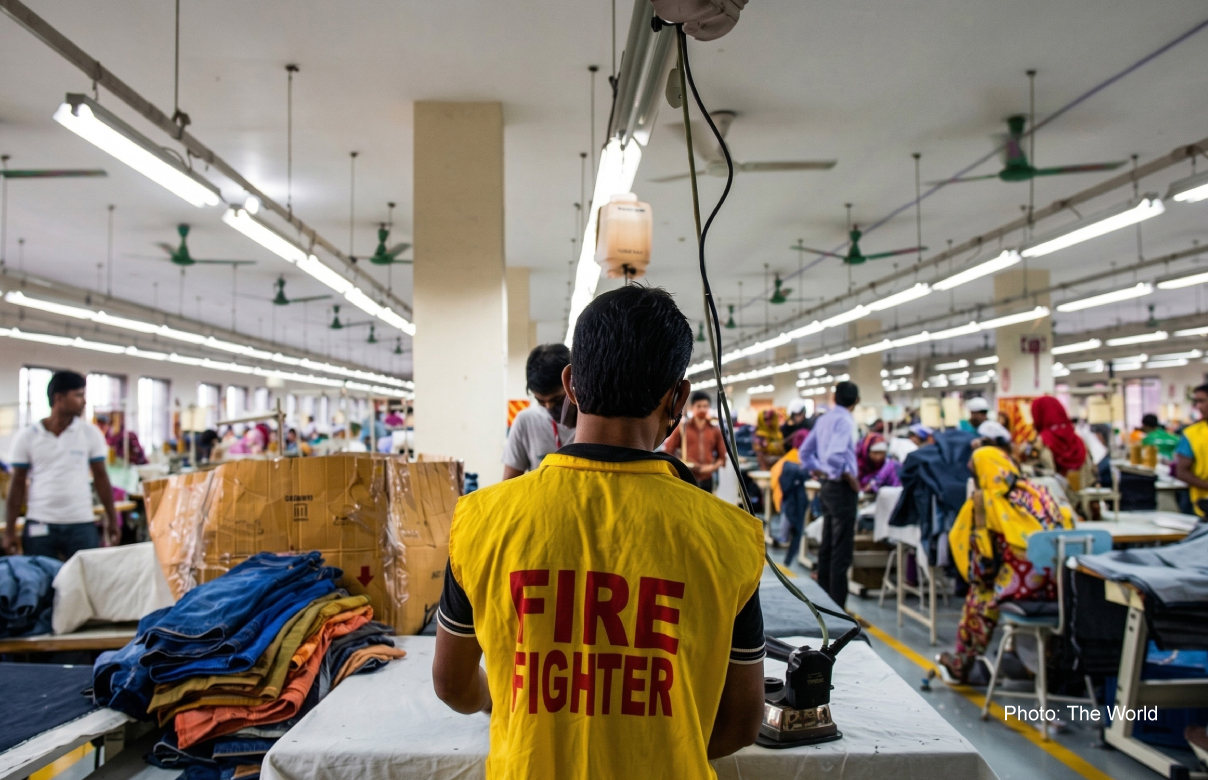
Bangladesh continues to face significant challenges in reducing poverty. Currently, around 36 million people, nearly one-fifth of the population, live below the poverty line. As a result, every year approximately 500,000 people migrate to Dhaka in search of work. Many of them are driven by environmental challenges such as floods and storms, which regularly disrupt rural livelihoods.
In this context, the readymade garment (RMG) sector has become one of the most accessible sources of employment, particularly for people with limited formal education. Consequently, the industry plays a crucial role in both economic development and job creation. However, it also raises important concerns about worker safety.

A major shift occurred in 2013 with the collapse of Rana Plaza. During this tragic incident 1,134 workers lost their lives and thousands more were injured. More importantly, it exposed serious weaknesses in factory safety and drew global attention to working conditions in Bangladesh.
In response, the government, industry stakeholders, and international partners introduced several reforms. These included stricter factory inspections, the formation of safety committees, regular fire drills, and expanded training programs for workers and managers. Over time, these measures have led to noticeable improvements in safety standards.

To evaluate how effective these safety measures have been, Innovision Consulting conducted a recent study. The aim was to assess how well safety training is understood and applied across different levels of factory workers.
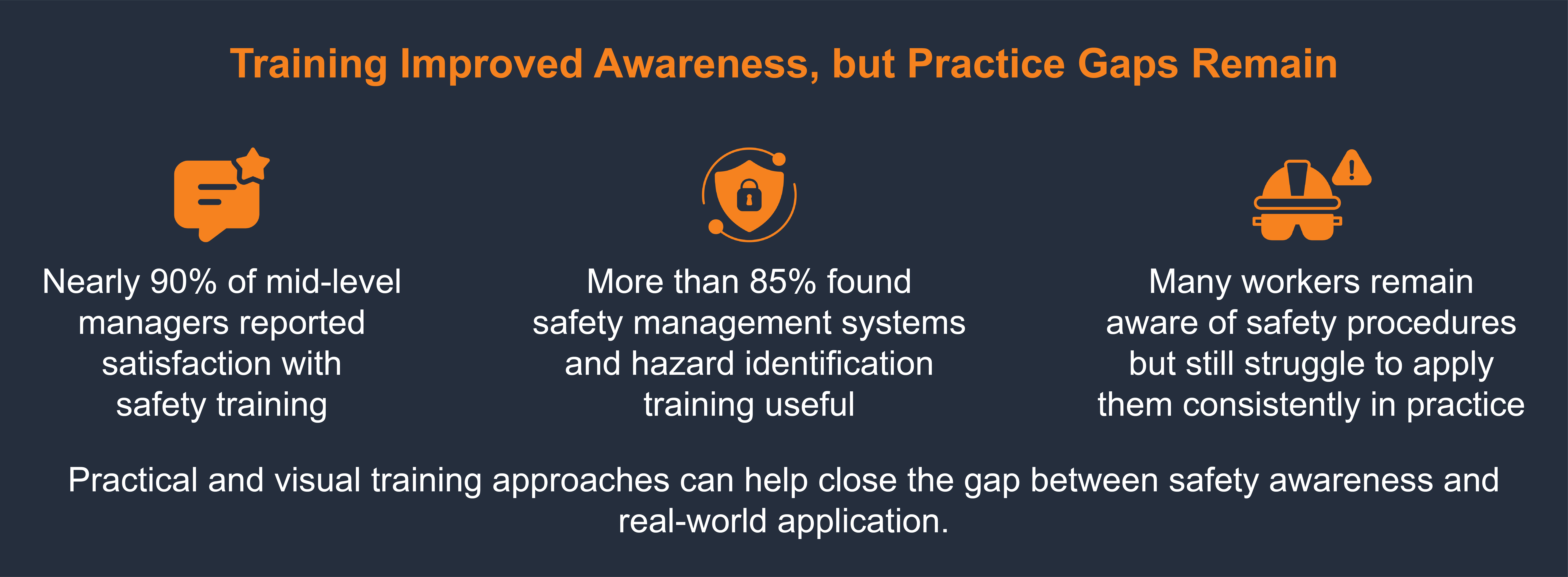
The findings indicate that training has been largely effective at the managerial level. Nearly 90% of mid-level managers reported satisfaction with the training. In addition, more than 85% found topics such as safety management systems and hazard identification particularly useful. However, many managers expressed a preference for more practical, hands-on training rather than purely theoretical sessions.
Despite these positive outcomes, the study highlights a critical gap between knowledge and practice.
On the one hand, managers have gained confidence and understanding through the training. On the other hand, this knowledge is not always effectively transferred to workers. Although workers are generally aware of safety systems, many struggle to explain or follow procedures step by step. This suggests that awareness alone is not sufficient; practical understanding is equally essential.
Furthermore, workers reported that work pressure and daily responsibilities often make it difficult to consistently apply safety measures. Nevertheless, the study also reveals an important opportunity. Workers showed strong interest in visual learning methods, such as cartoons, illustrations, and short videos. Notably, many participants were able to recall specific characters from these videos, indicating better retention.
Taken together, these findings suggest that the effectiveness of safety training depends not only on content, but also on delivery.
Therefore, the study recommends adopting more worker-centered approaches. For instance, incorporating visual storytelling, simplified instructions, and hands-on practice could significantly improve understanding. As a result, workers may be better equipped to apply safety procedures in real-life situations.
In conclusion, Bangladesh’s garment sector has made considerable progress in improving factory safety since the Rana Plaza disaster. Nevertheless, important challenges remain.
Most notably, there is a clear gap between training and its practical application at the worker level. Addressing this issue should be a priority. By making training more inclusive, practical, and engaging, stakeholders can ensure that safety is not only taught but also consistently practiced. Ultimately, this will help create a safer and more resilient industry.
Author: Nusrat Zabeen Radia, an Associate in the Industrial Productivity and Worker's Wellbeing Portfolio at Innovision Consulting
.png)