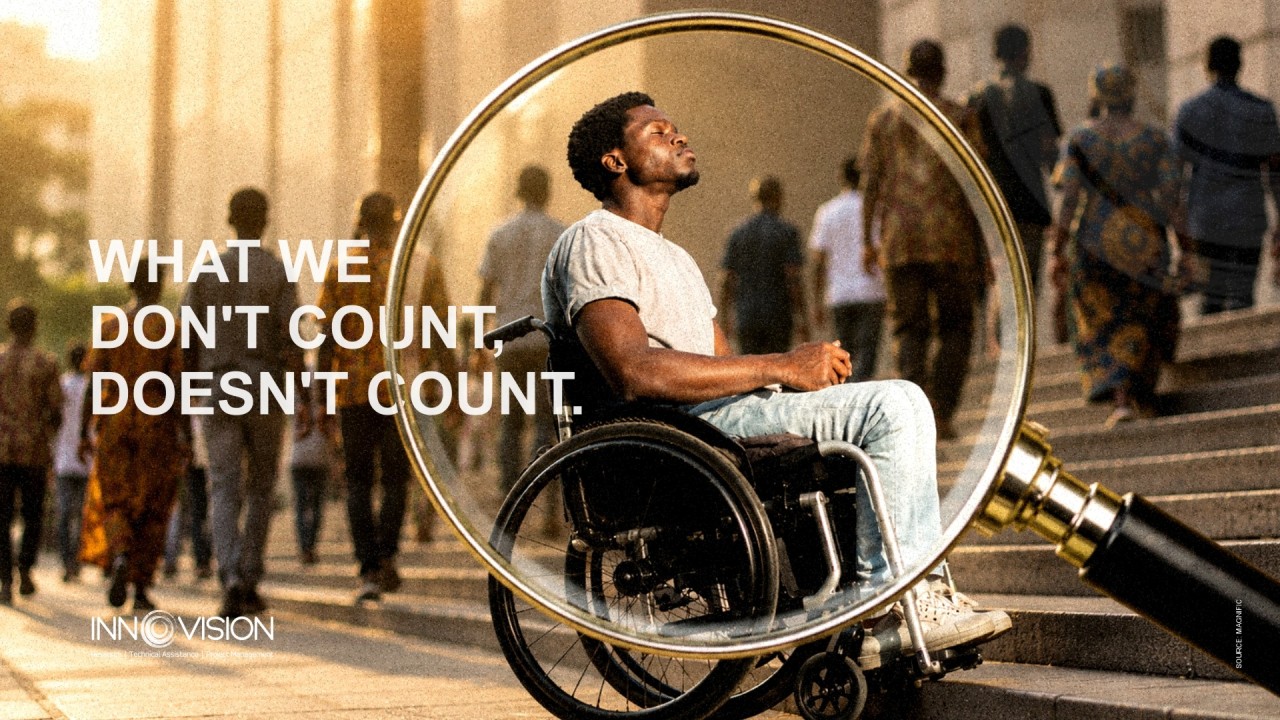
We often say that data drives development. Yet across Nigeria, the decisions that shape people's lives are still frequently made without seeing the people most affected by them. Surveys are conducted, reports are produced, and programmes are designed, but the data informing these decisions rarely captures the full diversity of the population. Strategic and policy choices continue to rely on national averages that obscure local realities and leave marginalised populations invisible.
What is not counted does not count. What is not measured cannot be fixed.
Nigeria's population in 2026 is estimated at over 242 million people. Yet we continue to struggle with a critical shortage of comprehensive, disaggregated data, particularly on Persons with Disabilities and the intersecting vulnerabilities of gender and geography.
World Bank assessments indicate that tens of millions of Nigerians live with some form of disability, with demographic surveys suggesting approximately 7% of household members above the age of five experience difficulty in at least one functional domain. M&E practitioners widely regard even these figures as underestimates, a direct consequence of how poorly we currently capture this data.
This is not just a measurement problem. It is a policy problem. The Discrimination Against Persons with Disabilities (Prohibition) Act of 2018 mandates a 5% employment quota for PWDs across public organizations. Without continuous, disaggregated data by state, gender, disability type, and age, we cannot track compliance, allocate resources accurately, or design interventions that actually reach the people they are meant to serve.
Nigeria's M&E ecosystem must therefore take the principles of the Inclusive Data Charter (IDC) seriously. The IDC is a global framework built to ensure that every population is visible in the data used to make decisions about them. In practice, this means moving beyond standard household surveys that routinely miss undocumented or marginalised communities. It means capturing what it means, for instance, to be a woman, a rural person, and to live with a physical disability simultaneously, so that the data reflects the actual composition of our society rather than a convenient approximation of it. It also requires sustained investment in the human and technical capacity of local enumerators and analysts, so that inclusive data is not only collected but interpreted and applied responsibly.
This is where intentional M&E design makes a real difference. At Innovision Consulting Africa, our work is grounded in the conviction that evidence-driven solutions must be inherently inclusive. Across our portfolios, we design M&E interventions that capture these nuances from the outset. Through baseline, midline, and endline surveys built around strict data disaggregation, we ensure that the multilateral donors, government agencies, and NGOs we work with have the precise insights needed to address poverty and inequality effectively. We do not simply collect data. We build systems that surface the voices of those furthest behind and translate granular findings into inclusive, large-scale implementation.
For Nigeria to achieve true pro-poor growth, we need a unified, continuous national database that prioritizes these missing demographics. That demands urgent, deliberate collaboration between government, the private sector, and M&E practitioners to fund and execute inclusive research. The question worth sitting with is this: If our data still cannot tell us who is being left behind, then the question is not whether we have enough data. The question is whether we are collecting the right data at all.
Source: Source: Worldometer (2026). Nigeria Population Projections, World Bank (2020). Disability Inclusion in Nigeria: A Rapid Assessment, Global Partnership for Sustainable Development Data. The Inclusive Data Charter, Federal Republic of Nigeria (2018). Discrimination Against Persons with Disabilities (Prohibition) Act.
Author: Obadiah Okpokpo, MERL Lead, Innovision Consulting Africa
.png)