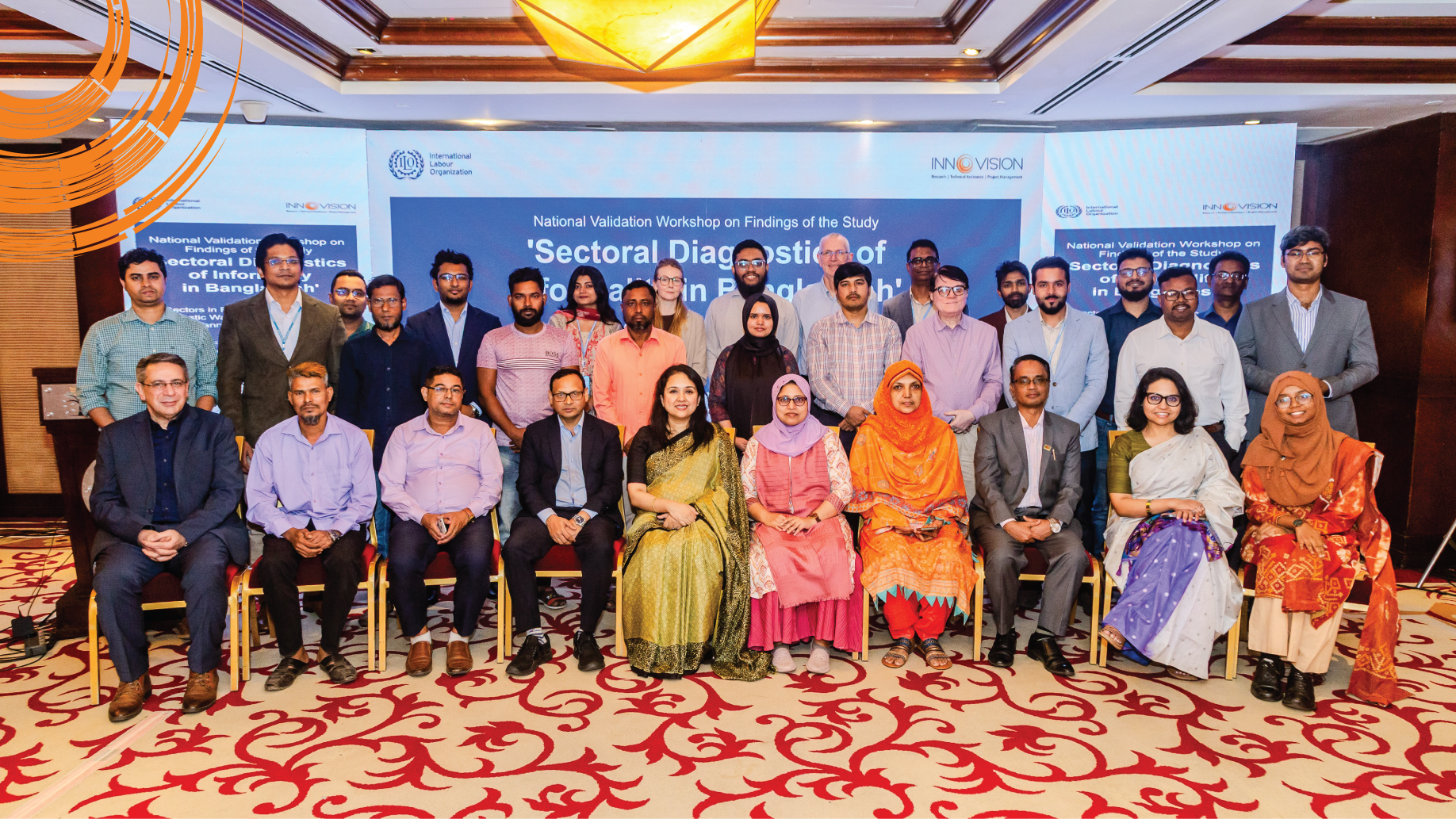
Innovision Consulting, in partnership with the International Labour Organization (ILO) in Bangladesh, organised the National Validation Workshop on the findings of the study “Sectoral Diagnostic of Informality in Bangladesh” on 9 March 2026 at Six Seasons Hotel in Dhaka.
The workshop brought together policymakers, industry experts, and development partners to review the study’s findings and discuss pathways to address informality across key industrial sectors.
The study, initiated in August 2025, examines the extent, nature, and drivers of informality in four sectors with significant employment and environmental implications: shrimp processing, medical plastic waste recycling, polyester recycling, and tanneries. The research aims to support evidence-based policy dialogue and identify practical strategies to facilitate gradual pathways toward formalization.
The session opened with welcome remarks from Ms. Tasmiah Tabassum Rahman, Portfolio Director at Innovision Consulting and Deputy Team Leader of the study. Drawing on field research conducted across the selected sectors, she highlighted the realities faced by informal workers and enterprises, emphasizing the need for policy approaches that reflect ground-level conditions.
In his remarks, Mr. Gunjan Bahadur Dallakoti, Head of Programme and SME Specialist at ILO Bangladesh, noted that while these sectors hold considerable export and economic potential, high levels of informal employment continue to constrain productivity, compliance, and the advancement of decent work standards.

Dr. Melita Mehjabeen, Team Leader of the study, presented the key findings of the sectoral diagnostic. The presentation highlighted the scale of informality in Bangladesh’s labour market, where approximately 84 percent of the workforce, representing around 58 million workers, operate within informal employment arrangements.
Participants engaged in a collaborative discussion to validate the findings and refine potential policy responses. Proposed pathways included the development of integrated digital one-stop platforms for enterprise services, the introduction of a digital labour registry to improve worker visibility, the creation of tiered pathways to formalization for micro and small enterprises, and expanded access to collateral-free finance.
In his closing remarks, Mr. Neeran Ramjuthan, Programme Manager at the ILO, emphasized that strengthening formalization pathways is essential not only for labour rights but also for ensuring decent work standards across supply chains and supporting sustainable economic growth.
The study is being implemented with support from the Team Europe Initiative on Decent Work in Bangladesh. The validation workshop marks an important step in refining the study’s recommendations and strengthening dialogue between government, industry, and development partners on building a more inclusive and formal labour market.
Innovision Consulting continues to support evidence-based policy research and multi-stakeholder dialogue to address structural labour market challenges and advance inclusive economic development in Bangladesh.
.png)