Bangladesh’s Ready-Made Garments (RMG) sector has been a cornerstone of the country’s economic growth for decades. But now, however, it finds itself navigating a changing global landscape.
Global buyers are no longer evaluating suppliers on product quality and price alone. They require visibility into how products are made, under what labour conditions, and at what environmental cost. Regulators across major export markets in Europe and North America are codifying those expectations into binding supply chain legislation, making ESG disclosure a trade requirement rather than a voluntary commitment. And the reputational consequences of past failures, most notably the Rana Plaza collapse of 2013, continue to shape how international brands approach sourcing decisions.
For Bangladesh's RMG industry, the central question is no longer whether to engage with ESG. That debate has largely been resolved by market forces. The more pressing question is how to build the technical capacity to do so credibly, at scale, and through locally grounded expertise that factories can access and afford over the long term.
Because of these requirements, Bangladesh is beginning to take more practical and locally grounded initiatives. Promoting Green Growth in the Ready-Made Garments Sector through Skills (PROGRESS) project is a four-year initiative running from 2022 to 2026, funded by the Embassies of Sweden and Switzerland and implemented by Swisscontact. Its foundational premise is that sustainable transformation in Bangladesh's RMG sector cannot be led by external actors alone. It must be anchored in a cadre of local professionals who understand the industry's operating realities and can deliver practical, context-sensitive ESG advisory services at scale.
Innovision Consulting Private Limited joined as an implementation partner from August 2025 to April 2026. Our engagement covered four core workstreams: training Local Technical Consultancy Providers (LTCPs) on ESG and sustainability reporting, conducting structured needs assessments across RMG factories, designing and facilitating the BizElevate Bootcamp, and supporting the onboarding of factories into active ESG advisory relationships.
This was substantive implementation work. Our teams were present in the training rooms, in factory assessment meetings, and in the consultations that shaped how LTCPs positioned their services.
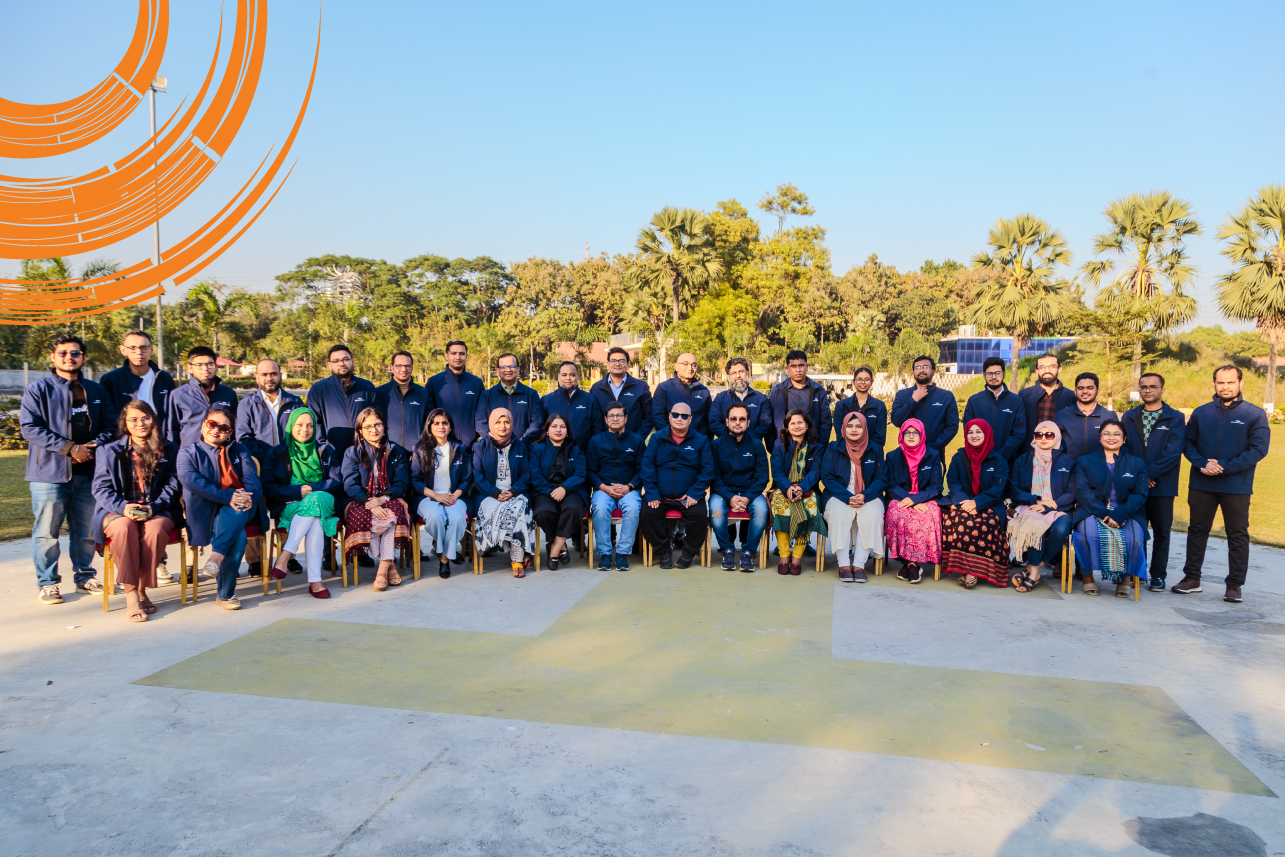
The original project design set a training target of 20 Local Technical Consultancy Providers (LTCPs). Innovision delivered training to 29 individuals (12 female participants), exceeding that target by nearly 50 percent.
Over one and a half months, in partnership with Specialised Consultancy Service Provider (SCSPs) SusNex Ltd., participants engaged with the technical foundations of ESG frameworks and international sustainability reporting standards. The curriculum was not limited to content knowledge, however. A deliberate emphasis was placed on communication and advisory practice, equipping professionals who already understood the garment industry with the language and confidence needed to engage factory management credibly on ESG matters.
That distinction is worth emphasising. Technical competency without the capacity to translate it into actionable guidance does not move factories forward.
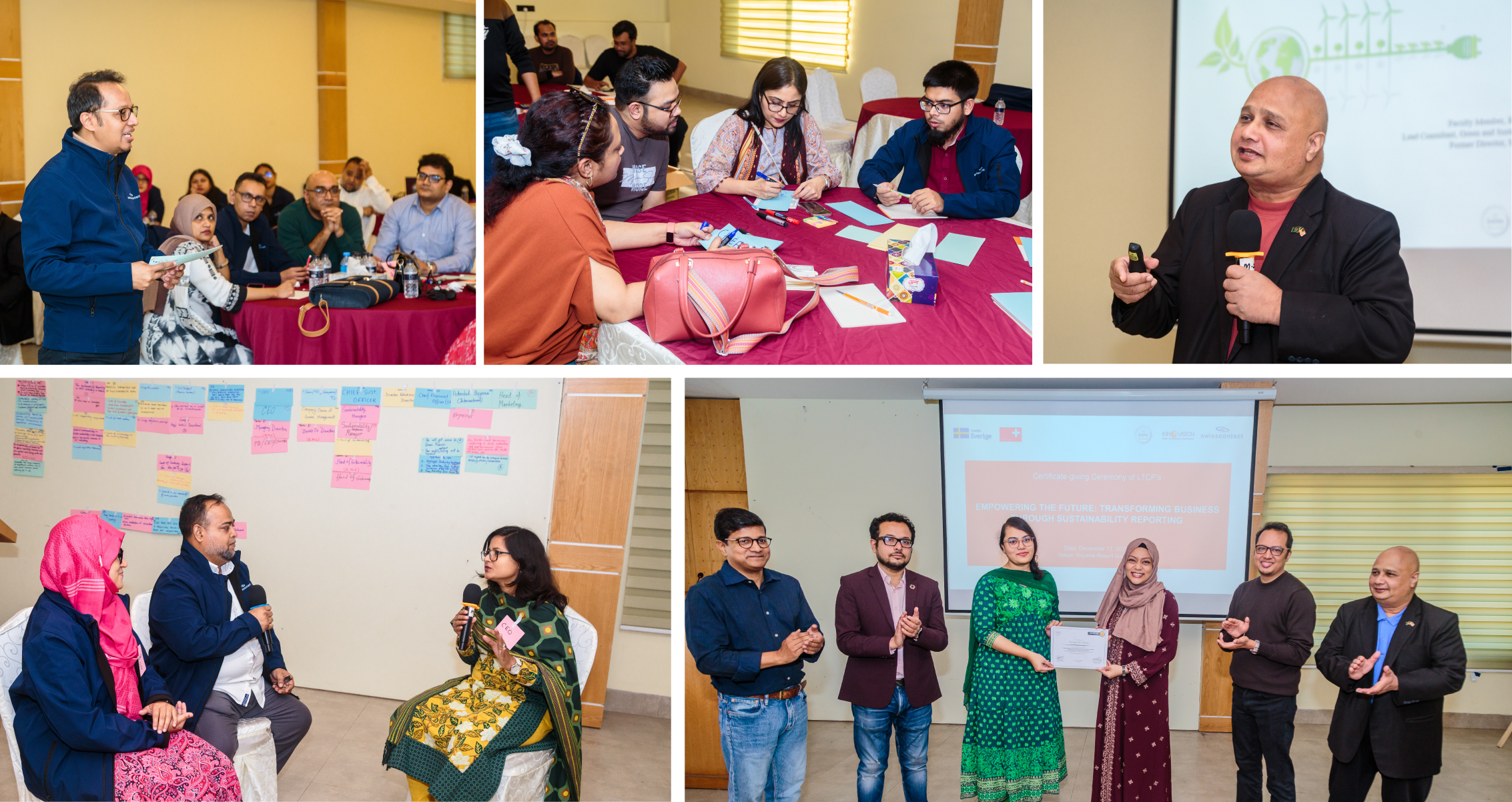
Following the completion of the formal training programme, Innovision designed and facilitated the BizElevate Bootcamp as a structured transition into professional practice. The distance between completing a training course and operating as an independent consultant is wider than most capacity-building programmes account for. The bootcamp was built to close that gap.
The bootcamp sessions were enriched by the contributions of Mr. Mohammad Monower Hossain, Chief Sustainability Officer at Team Group; Md. Rubaiyath Sarwar, Managing Director of Innovision Consulting; and Mr. Khondkar Morshed Millat, former Director of the Sustainable Finance Department at Bangladesh Bank, current faculty member at BIBM, and ESG, Sustainability, and Sustainable Finance Advisor to PROGRESS.
Participants refined their service offerings, developed their client engagement frameworks, and worked through the professional positioning decisions that determine whether a trained individual can function effectively in a competitive advisory market. It was demanding, practical work. And it was precisely the kind of preparation that makes the difference between a cohort of trained graduates and a cohort of market-ready professionals.
Before LTCPs could engage factories meaningfully, an accurate picture of existing ESG awareness and readiness was needed. Innovision conducted structured needs assessments in 39 RMG factories across Gazipur, Savar, Narayanganj, and Chattogram. It was found that many factory owners still consider ESG primarily as a compliance burden rather than a business opportunity. The most common gap was low awareness of ESG requirements. Without increasing the factory-level awareness and capacity building, it will be difficult to actively engage the LTCPs with the factories to provide ESG advisory services.
Two factories have been formally onboarded for ESG advisory services. Three LTCPs have secured positions as ESG advisors and in related roles within sector organisations.
These figures are modest. It is important to acknowledge that plainly. However, they are concrete, verifiable outcomes that did not exist before this project, and they establish something meaningful: that demand for locally delivered ESG expertise in Bangladesh's RMG sector is real, and that trained professionals can convert that demand into structured service relationships.
Each onboarded factory is a proof of concept. Each placed consultant adds to the evidence base that a locally driven ESG advisory market is viable and worth investing in further.
Awareness must precede assessment. In factories where owners have not yet connected ESG requirements to their business interests, a formal gap assessment can feel adversarial rather than constructive. Investment in awareness-building needs to come first, even when it extends the timeline.
Local expertise carries advantages that external consultants cannot replicate. The LTCPs developed through this programme understand the pressures factory managers face, the operational constraints they work within, and the commercial language they respond to. That contextual knowledge is an asset. It should be recognised and invested in accordingly.
Accessible digital tools could accelerate adoption significantly. Many of the factories assessed lack the basic data management systems that ESG reporting requires. Low-cost digital platforms for data collection and reporting could reduce both the cost and the complexity of compliance for smaller factories, and extend the reach of the consultants advising them.
Collaboration with buyers and industry associations. Greater collaboration with buyers and industry associations will also play a critical role in accelerating this transition, alongside early-stage awareness-building to ensure ESG requirements are understood as business-enabling rather than compliance-driven. This should be complemented by leveraging local expertise, particularly LTCPs who understand factory realities and can communicate in commercially relevant terms, as well as the introduction of accessible, low-cost digital tools to simplify data management and support wider adoption among smaller factories.
Bangladesh's RMG industry employs over four million workers. Its trajectory over the coming decade will be shaped, in part, by how seriously and how effectively it pursues the green transition, and by whether the technical expertise needed to manage that transition is built here, locally, at sustainable cost.
The PROGRESS project represents one part of that larger effort. The model that Innovision helped design and deliver, structured LTCP training, a professional readiness bootcamp, and systematic factory assessment, is replicable. It can be scaled across different regions, adapted for varying factory sizes, and applied at different points along the ESG maturity curve.
Looking further ahead, the sector's commercial competitiveness and its contribution to the United Nations Sustainable Development Goals, particularly those concerning decent work, responsible production, and climate action, are not separate objectives. They are, in fact, the same objective. And the path toward both runs through the factory floor, through the consultants equipped to navigate it, and through the industry-wide commitment to making that navigation a shared priority.
European Commission, Corporate SustainabilityReporting Directive (CSRD) (Brussels: European Commission, 2022); EuropeanCommission, Proposal for a Corporate Sustainability Due Diligence Directive(CSDDD) (Brussels: European Commission, 2022).
Steven Greenhouse, “The Rana Plaza Collapse andIts Aftermath,” The New York Times, April 2013.
Author: Nusrat Zabeen Radia, an Associate in the Industrial Productivity and Worker's Wellbeing Portfolio at Innovision Consulting
.png)