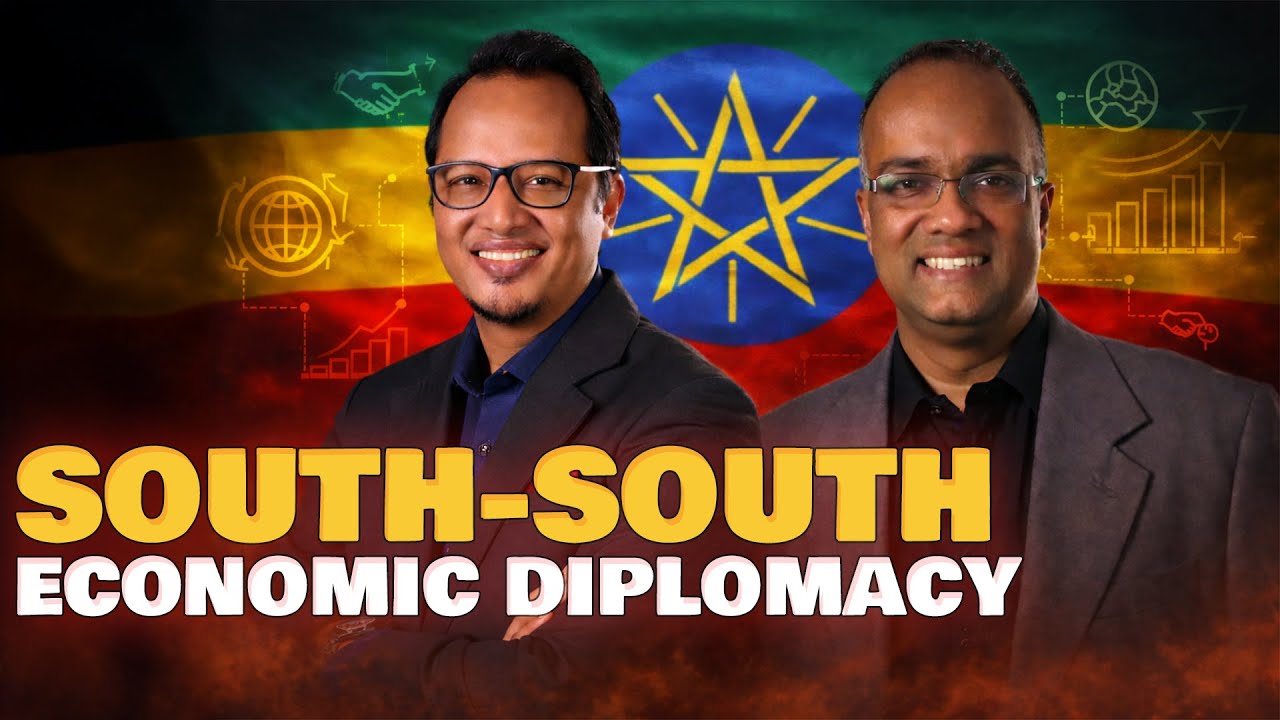
Originally featured on Counterpoint, a weekly newspaper and online platform offering in-depth analysis of Bangladesh and global issues, this episode of J&J Fireside explores Ethiopia’s evolving economic landscape and its wider implications for the Global South.
Ethiopia is experiencing rapid infrastructure expansion and rising foreign investment. However, beneath this growth lies significant macroeconomic pressure, including inflation, currency devaluation, fiscal constraints, and geopolitical tensions.
In J&J Fireside | Episode 1, macroeconomist Jyoti Rahman and Md. Rubaiyath Sarwar, Managing Director of Innovision Consulting, reflect on their recent field experiences and unpack the structural and political dynamics shaping one of Africa’s most strategically important economies.
Dialing in from Addis Ababa, Ethiopia, Md. Rubaiyath Sarwar shares firsthand observations of a dual reality: rapid infrastructure expansion alongside rising inflation, exchange rate volatility, and fiscal strain.
The episode explores key macroeconomic challenges shaping Ethiopia’s current trajectory, including:
Despite these pressures, Ethiopia continues to position itself as a regional economic hub, attracting foreign capital and expanding transport and infrastructure networks.
A central theme of this episode is the growing importance of South–South economic diplomacy and shifting global trade patterns.
The discussion highlights:
These trends reflect a broader transformation in global economic relationships, particularly across emerging markets.
The conversation also draws important lessons for Bangladesh in the context of emerging Global South partnerships:
The episode underscores significant untapped opportunities in South–South trade and the need for more coordinated economic engagement.
J&J Fireside brings together macroeconomic analysis and development field experience to explore how global economies are evolving under pressure.
This episode offers a grounded, comparative perspective on Ethiopia’s economic challenges and the future of South–South economic cooperation.
It highlights how emerging economies are navigating growth, crisis, and global integration, and what it will take to translate connectivity into sustained economic transformation.
.png)