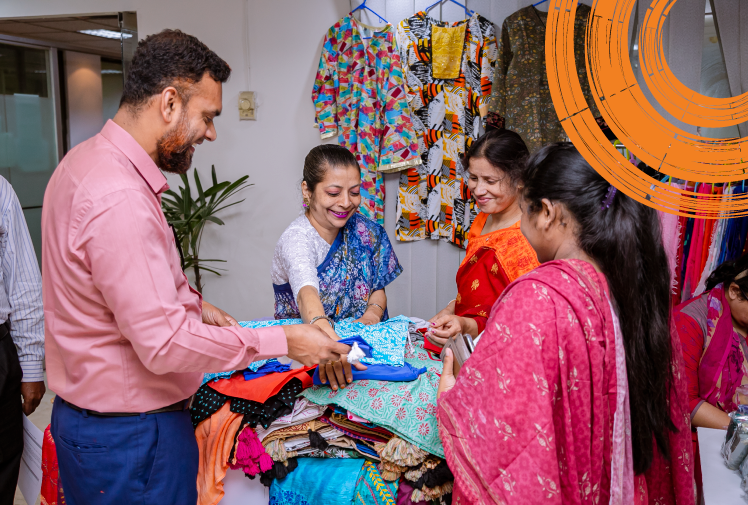
Women-led enterprises in Bangladesh have long been discussed through the familiar lenses of access to finance, market linkages, and skills development. These areas remain central to economic inclusion and continue to shape most interventions in the sector.
But as digital infrastructure expands and mobile technology becomes more deeply embedded in everyday business activity, another factor is quietly becoming important: how comfortably entrepreneurs can work with digital tools.
Artificial intelligence is gradually finding its way into how women entrepreneurs manage sales, track inventory, communicate with customers, and make financial decisions. For some, it is already part of daily operations. For many others, it remains distant or unfamiliar.
The difference is not about ambition. It is about access, exposure, and the ecosystems that surround them. And that difference is starting to matter.
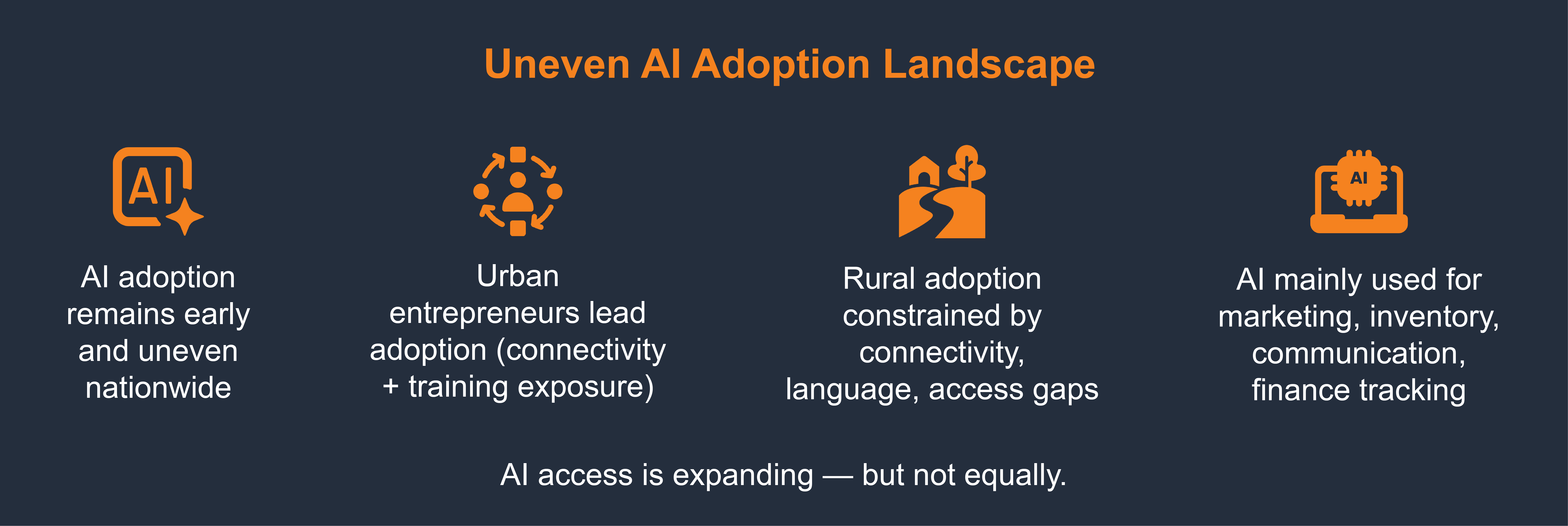
AI adoption among women entrepreneurs in Bangladesh remains at an early and uneven stage, with significant variation driven by differences in geography, digital access, and exposure to technology (Cherie Blair Foundation, 2026; Sikder et al., 2023).
Where it is used, it tends to serve very practical needs; marketing support, customer communication, basic financial tracking, inventory management, and simple analytics.
But these tools are not reaching everyone in the same way.
Urban women entrepreneurs are leading the adoption of digital and AI-related tools, driven by better internet access, stronger business networks, and greater exposure to training opportunities (World Bank, 2021; BBS, 2024; Cherie Blair Foundation, 2026).
In rural areas, adoption remains significantly lower, with entrepreneurs facing constraints such as unstable connectivity, fewer training opportunities, limited exposure to digital tools, and language barriers that make adoption more difficult (UNDP, 2022; GSMA, 2023; World Bank, 2021).
The numbers show adoption. They don’t fully show what it means to run a business without access to tools that are slowly becoming standard elsewhere.
The difference in adoption is not driven by a single factor. It is the result of several constraints reinforcing each other over time.
Digital access remains uneven. Digital access remains uneven, with significantly higher internet connectivity in urban areas compared to rural regions, limiting consistent use of digital and AI-based tools (BBS, 2024; DataReportal, 2026).
Training opportunities are concentrated in cities. Most structured digital literacy and AI-related training programmes are urban-based and often not designed for lower literacy levels or Bangla-first learning.
Networks matter. Urban entrepreneurs are more likely to be part of business communities, fairs, and incubators where new tools and ideas circulate informally. Rural entrepreneurs often operate in isolation.
Markets are easier to reach in cities. Closer proximity to suppliers, logistics services, and larger customer bases makes it easier for urban businesses to experiment with digital tools and see immediate returns.
Social constraints also play a role. In some rural contexts, mobility restrictions and social expectations limit women’s participation in training, networking, and external engagement.
Taken together, these factors shape not just access to AI but also the confidence and opportunity to use it.
.png)
The effects of this divide show up in everyday business realities.
For rural women entrepreneurs, limited access to automation and digital tools often means more time spent on manual work, less visibility in markets, and higher uncertainty in financial planning. Over time, this affects how businesses grow or whether they grow at all.
Urban entrepreneurs are not entirely outside these challenges either. Many still struggle with the cost of advanced tools, lack of localized Bangla interfaces, and limited guidance on how AI can be applied to traditional sectors such as textiles, food processing, or handicrafts.
Across both groups, a common pattern emerges: access to digital tools is increasingly linked to how far a business can scale, not just how it operates day to day.
.png)
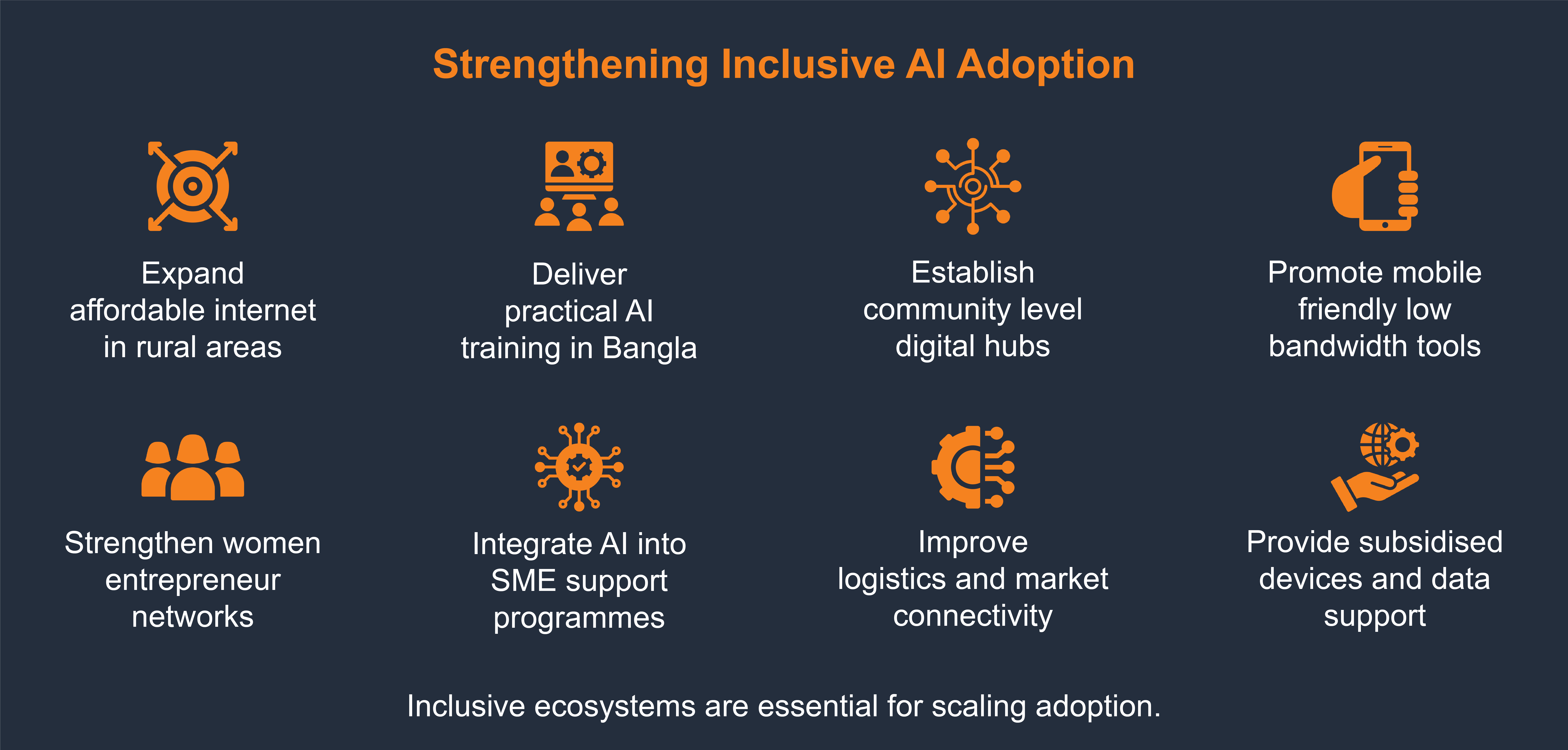
Closing the gap in AI adoption will require more than introducing new tools. It will depend on how accessible, relevant, and practical those tools are for women entrepreneurs across different contexts.
Some priorities stand out clearly:
Bangladesh has made steady progress in expanding women’s participation in entrepreneurship. But participation alone is no longer enough.
What matters now is whether women entrepreneurs can actually use the tools that are shaping today’s markets, especially digital platforms and emerging AI-based solutions.
This is where the focus needs to shift. Access to technology, practical digital skills, and the right support systems can no longer be treated as secondary. They are now central to how businesses grow and stay competitive.
If AI is becoming part of how business is done, then the real priority is making sure women entrepreneurs are not left behind in that transition.
1. Cherie Blair Foundation for Women. (2026). Adopted but not embedded: AI adoption among women entrepreneurs.
2. Sikder, A. S., et al. (2023). Artificial intelligence-enabled transformation in Bangladesh.
3. World Bank. (2021). Bangladesh Digital Economy Diagnostic.
4. Bangladesh Bureau of Statistics (BBS). (2024). ICT Access and Use Survey.
5. UNDP Bangladesh. (2022). Digital inclusion and gender-related reports.
6. GSMA. (2023). Mobile Gender Gap Report.
7. DataReportal. (2026). Digital 2026: Bangladesh.
Author: Somiya Akter Nehat, an Associate in the Inclusive Financia Solutions (IFS) Portfolio at Innovision Consulting.
.png)