When I first tried to understand how credit cards work and discussed their benefits with colleagues, I noticed that many people still view them as financially risky. For many, a credit card feels like an easy route into debt rather than a practical financial tool. This perception is common, and it influences how people use (or completely avoid) credit cards.
What is a Credit Card and How It Works
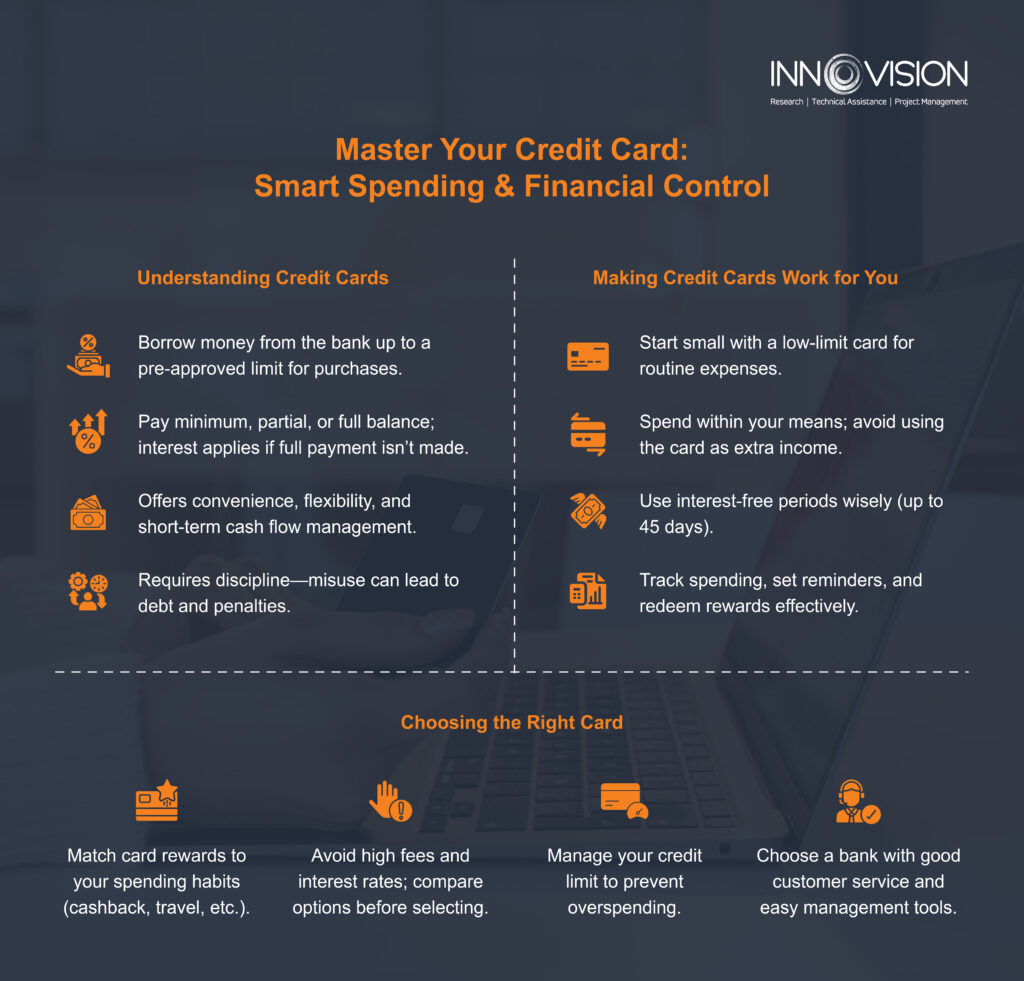
A credit card is a financial tool that allows someone to borrow money from a bank or financial institution to make purchases now and pay that amount back later.
This is different from a debit card, which withdraws money directly from a bank account right away. With a credit card, the bank provides access to a spending limit first.
When a bank issues a credit card, it sets a pre-approved borrowing limit. Within that limit, the cardholder can make purchases even if they do not have cash available in their account at that moment. Each time the card is used, the bank pays the merchant on behalf of the cardholder, assuming all conditions are valid.
You have three ways to repay your balance. You can pay the minimum amount, which avoids late fees but means interest will be charged on the remaining balance according to the bank’s terms. You can pay more than the minimum but less than the full balance, in which case interest is applied to the unpaid portion, usually calculated monthly or daily depending on the bank. Or you can pay the full balance by the due date, typically about 15 days after your statement, to avoid any interest charges. If no payment is made, the bank will apply penalties such as late fees and higher interest on the outstanding balance.
This means that while credit cards provide convenience and spending flexibility, they also require discipline and responsible usage.
Do You Need Credit Cards
Not everyone needs a credit card, but it can be highly beneficial if used wisely. A card is useful for managing short-term cash flow, handling emergencies, earning rewards, and building a strong credit history. If you are disciplined, can pay off your balance on time, and want additional financial flexibility, a credit card can be a valuable tool. However, if budgeting is a challenge, it may be better to start with simpler financial products until you can manage borrowed funds responsibly.
A Tool for Long Term Financial Planning
Credit cards are not only a short term tool for managing cash-flows, but can be a tool for long term financial planning. An individual’s credit card repayment behavior informs their credit score. A credit score is an indication of an individual’s creditworthiness, based on information in their credit report. When an individual falls behind on repaying their credit card balance, a report is sent to the Credit Information Bureau, which is in charge of handling consumer credit scores.
However, Bangladesh has no consumer credit scoring system. Individual repayment histories are only recorded when a borrower defaults, and this information is stored in the central bank’s database. In contrast, Western economies have established credit bureaus (e.g., TransUnion, Equifax) that continuously track and update consumers’ credit scores. Credit cards play a central role there: responsible usage and timely repayment improve creditworthiness, enabling cheaper access to personal, auto, mortgage and other long term loans.
Bangladesh lacks these mechanisms. There are no formal credit rehabilitation or consolidation services, and many recovery agencies rely on harassment rather than legal procedures. Consumer credit products were introduced without adequate institutional preparation or a supportive legal framework, leaving a major structural gap in the country’s financial system Making Credit Cards Work for You
The benefits of credit cards depend entirely on how they are used. When managed responsibly, a credit card can provide convenience, flexibility, and a way to efficiently manage short-term cash flow. Here are some practical ways to make the most of your card:
- Start small: Begin with a low-limit card and use it for routine expenses such as groceries, utility bills, or fuel. This helps you build a repayment habit without overextending your budget.
- Spend within your means: Only charge what you can afford to repay within the interest-free period. Avoid using your card as a substitute for income you don’t have.
- Take advantage of interest-free periods: Many banks offer up to 45 days interest-free. Use this time wisely to manage payments without extra cost.
- Set reminders or enable auto-debit: This ensures you never miss a payment, helping maintain a strong credit record and avoiding unnecessary interest.
- Track spending and rewards: Regularly review your statements to monitor your expenses, stay within your budget, and redeem cashback or rewards. Let the card work for you, not the other way around.
- Use credit wisely: Remember, the card itself does not create debt; habits do. Timely payments, careful budgeting, and responsible usage build financial discipline and a positive credit history.
By following these steps, credit cards can become your financial ally, providing flexibility for emergencies, convenience in daily spending, and opportunities to earn rewards.
Which Credit Card to Choose
Choosing the right credit card can be challenging, especially with so many options available in the market. It is important to select a card that matches your spending habits and financial needs. Consider the following factors:
- Match the card to your spending patterns: Choose cashback or rewards in categories you use frequently or select travel benefits if you travel often.
- Avoid high fees and interest rates: Compare annual fees, late payment fees, and interest rates before deciding.
- Ensure rewards align with your habits: Do not pick a card for points or cashback you won’t use.
- Manage your credit limit: A high limit can encourage overspending. Start with a limit you can comfortably repay.
- Evaluate the bank’s services: A good mobile app, easy payment options, and responsive customer support simplify card management.
The wrong card can lead to unnecessary debt, while the right card becomes a practical tool for smarter financial management.
Credit cards, when understood and used responsibly, are a tool for smarter money management rather than a source of financial risk. By choosing the right card, spending within your means, taking advantage of interest-free periods, and keeping track of rewards and payments, you can make a credit card a source of convenience, flexibility, and financial empowerment. Discipline and awareness are essential. Treat your card as a tool rather than a crutch to build a positive credit history, handle unexpected expenses with confidence, and make your money work harder for you.
Author (s):
Md Robiul Islam, a Junior Associate in the Business Development and Communications at Innovision Consulting
Somiya Akter Nehat, an Associate in the Inclusive Financia Solutions (IFS) Portfolio at Innovision Consulting.