Mental health in Bangladesh is often discussed, but still rarely addressed in practice. While awareness is slowly growing, especially among young people, the reality is that mental health support remains limited, underfunded, and surrounded by stigma. National data shows that nearly one in five adults (18.7%) in Bangladesh lives with a mental health condition, with women affected more than men (NIMH, 2021). At the same time, access to care remains extremely limited, with fewer than one psychiatrist available per 100,000 people (WHO, 2020).
These challenges are especially visible in the Ready-Made Garments (RMG) sector, which employs around four million workers and is largely made up of women. The sector is central to Bangladesh’s economy, but the nature of factory work-long hours, production pressure, and job insecurity often affects workers’ mental well-being. Research shows that around 69% of garment workers experience work-related stress, while anxiety and depression affect 66% and 48% of workers, respectively (Shamsi, 2024). Among female garment workers, depression is particularly widespread, affecting nearly 69% of the workforce (Akter, 2019). Poor mental health not only harms workers’ quality of life but also impacts workplace performance and factory efficiency.
In response to these challenges, Innovision Consulting has partnered with the British Asian Trust as the Evaluation and Learning Partner for Phase 2 of the Moner Kotha Mental Health Programme, which aims to strengthen mental health support for RMG workers across Bangladesh.
As part of this role, Innovision is conducting a baseline assessment to better understand workers’ awareness, attitudes, and experiences related to mental health. The study also explores stigma and help-seeking behaviour, along with factory management perspectives on mental health in the workplace. In addition, consultations with local mental health professionals and community leaders are helping to map service availability and referral realities on the ground.
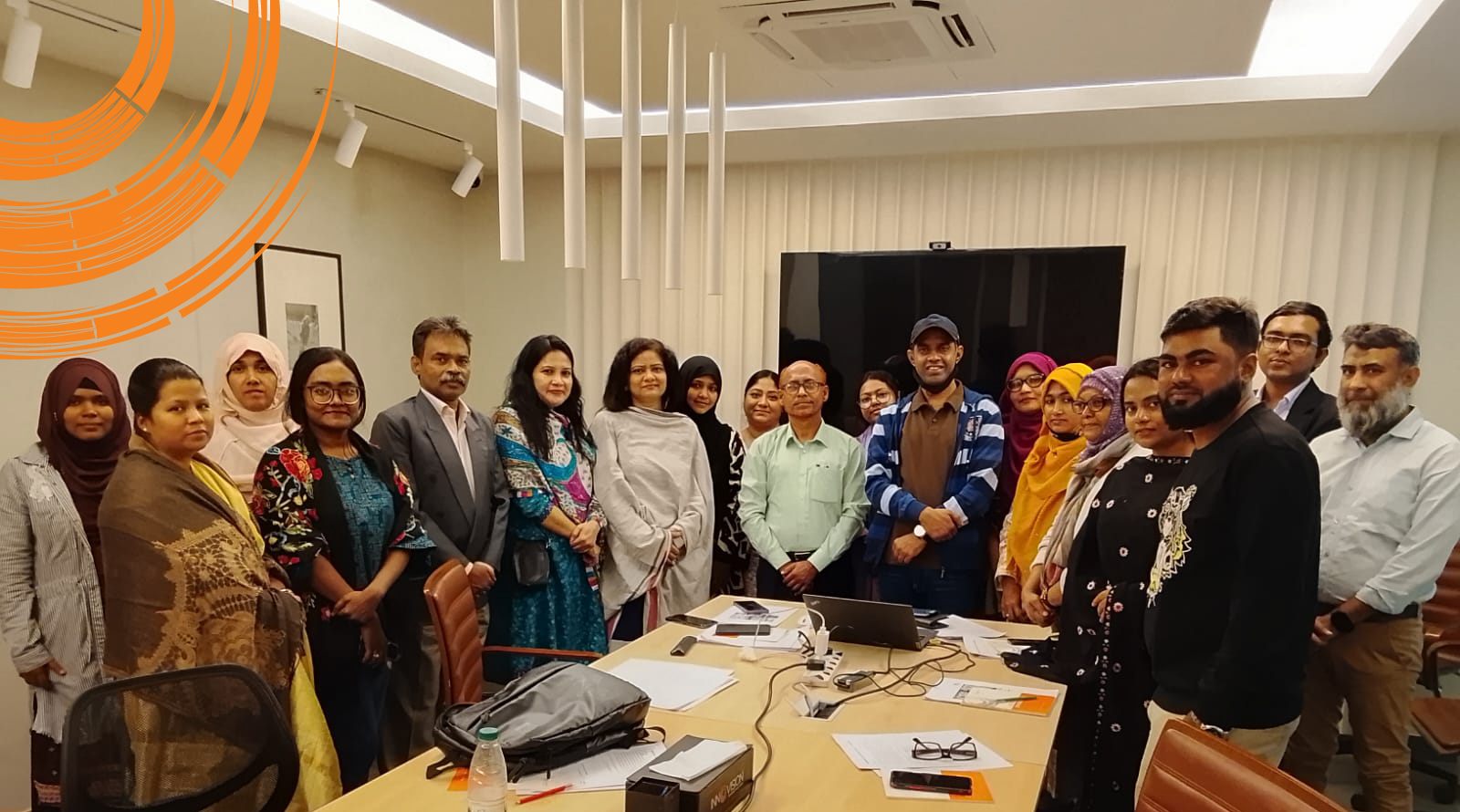
To prepare for the baseline study, Innovision held a training session on 25 January 2026 at its Dhaka office for the team of data researchers responsible for collecting and managing the survey data. The session helped the team understand the purpose of the programme and the practical steps for data collection. Researchers were trained on using validated mental health assessment tools and guided on how the baseline findings will be used to inform learning and improve the programme throughout its cycle.
The session was facilitated by mental health expert Dr. Md. Salim Hossain, together with Innovision’s Gender and Basic Services research team. Particular emphasis was placed on ethical research practices, including informed consent, confidentiality, and do-no-harm principles, especially important when working on sensitive mental health issues in factory settings.
This baseline training marks the start of a structured evaluation and learning process that will continue across the programme cycle. Insights from the baseline will guide future assessments and help partners understand what is working, what needs adjustment, and how factory-based mental health support can be strengthened in practical and sustainable ways.
Through this partnership, Innovision aims to support people-centred mental health solutions that reflect workers’ lived realities, support factory leadership, and contribute to healthier and more supportive workplaces across Bangladesh’s RMG sector.
Innovision continues to work with development partners, brands, and implementers to design and deliver evidence-informed programmes in complex and sensitive contexts. Organisations interested in strengthening workplace well-being, generating practical evidence, or building learning systems that lead to real change are encouraged to connect with Innovision to explore collaboration opportunities.
.png)